Here's what no one tells you about SSRIs and sex
Antidepressants save lives. They also flatten pleasure. Not as a side effect you might get, but as a predictable outcome that affects roughly 40 to 60 percent of people taking SSRIs. And here's the part that rarely gets discussed: when your partner is on antidepressants, your sex life changes too.
You're both experiencing delayed sensation. You're both waiting longer for arousal. You're both less likely to orgasm. The intimacy gap widens not because either of you stopped caring, but because the neurochemistry changed.
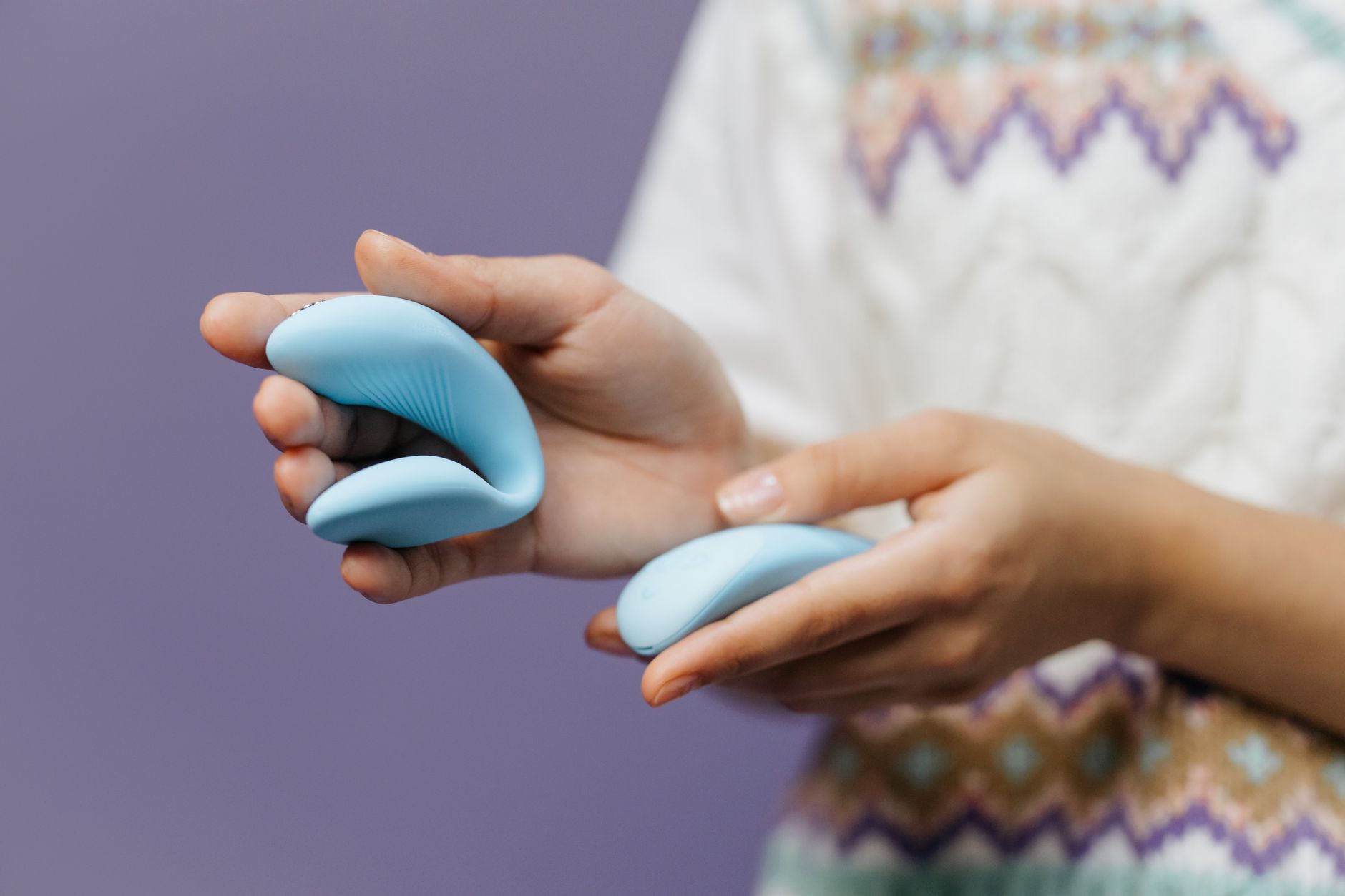
Photo by cottonbro studio on Pexels
How SSRIs actually change sensation for both partners
SSRIs work by increasing serotonin availability in the brain. That's the mechanism that reduces depression and anxiety. But serotonin also regulates arousal, orgasm intensity, and the entire genital response cycle.
When serotonin is higher overall, the brain becomes less responsive to the specific trigger signals that usually fire during sex. Genital stimulation still registers, but as muted. The signal gets there, but it arrives quieter.
For the person taking the medication, this shows up as delayed arousal, difficulty reaching orgasm, or orgasms that feel distant and hard to access. For partners, the dynamic shifts too. Your partner's slower arousal can make you second-guess whether they're actually interested. The longer everything takes, the easier it is for anxiety to creep in.
Then attention fractures. You're both thinking about what's not happening instead of what is.
Why lemon vibrators work differently for SSRI-related numbness
Traditional vibrators are effective, but they rely on sustained oscillation to eventually build the signal strong enough to override the SSRI dampening. That means longer sessions, higher intensities, and often more frustration.
Lemon clitoral vibrators use suction plus gentle pulsing instead of pure vibration. The suction mechanism stimulates a different neural pathway. Instead of waiting for the numbness to part like a curtain, suction creates immediate localized pressure that engages the clitoral network directly.
Here's what I see in practice: someone on an SSRI picks up a traditional vibrator and needs 20 to 30 minutes of consistent high-intensity stimulation to feel anything. The same person uses a lemon suction vibrator and feels responsive sensation within 3 to 5 minutes. The difference isn't psychological. It's mechanical.
For couples, this matters enormously. When the receiving partner can access sensation faster, arousal builds for both of you. The momentum shifts from frustration to presence.
The conversation you both need to have first
Here's what derails most couples: one partner blames the medication, the other hears blame directed at them. Or one partner stops initiating entirely to "be nice," and resentment pools underneath.
The conversation isn't about fixing the problem together. It's about naming it together first.
Say this out loud to your partner: "Your antidepressant is helping your brain work better. It's also changing how your body responds sexually. That's not your fault. It's also not something I'm upset about. But it's real, and we need to talk about what that means for us."
Then ask: "What are you actually feeling physically? Not what you think you should feel, but what you're noticing?"
Most people haven't been asked that directly. They've been navigating shame or self-blame. Asking changes the dynamic immediately.
How to rebuild sensation together with lemon vibrators
Three practical adjustments:
Start with lower intensity and longer warm-up time. If your partner usually enjoyed firm vibration, lemon clitoral vibrators actually deliver better sensation at patterns 1 and 2 than traditional toys do at 8 and 9. Less intensity paradoxically means faster response.
Use it as part of foreplay, not a replacement for connection. The mistake couples make is treating a lemon vibrator like the solution. It's not. It's a tool that makes sensation accessible. The actual intimacy is still the two of you. A lem vibrator gets you to presence faster, but your hands, mouth, and attention are still doing the relational work.
Alternate who initiates. If the partner on antidepressants has been the slower responder, they might have stepped back from initiating. Rebuild confidence by having them suggest it sometimes. You might use a lemon vibrator on them. Next time, they might want to use it on you. The back-and-forth matters.
When to talk to a doctor about medication adjustment
Not all SSRIs affect desire equally. Some people find one medication flattens sensation dramatically while a different one is barely noticeable. Your partner's prescriber might not have even mentioned sexual side effects unless asked directly.
It's worth a conversation. Options include switching medications, adjusting timing of doses, or adding a supplemental medication to counteract sexual side effects. These conversations happen in maybe 15 percent of cases when they should happen in 80 percent.
You don't need to enter that conversation pretending to be a medical expert. Just say: "Sex feels different since you started this medication. Is that something you've noticed? And is it something worth talking to your doctor about?"
Many people assume they have to choose between their mental health and their sex life. In many cases, they don't.
The emotional reality underneath the physical one
Antidepressants work best when someone actually wants to feel better. That wanting is the mechanism. But sometimes after the medication kicks in and depression lifts, people are surprised to find their sex drive is still flat.
That can trigger a new kind of sadness. "I'm not depressed anymore, so why don't I want this?"
The answer is neurochemical, not emotional. But it feels emotional. It feels like loss.
For partners, this might trigger old anxieties. "They don't want me anymore." "We'll never have good sex again." "Maybe we're just not compatible."
These thoughts make sense. They also aren't usually true.
The slower, smaller sensation? It's still there. A lemon vibrator helps you both access it faster. Patience helps you both stay present while it builds. And time, usually 6 to 12 months in, often brings partial recovery as the body recalibrates.
I've seen couples rebuild authentic, responsive intimacy after antidepressants. It takes a different map than it used to. The destination is just as real.
FAQ: Common questions about antidepressants and intimate devices
Can using a lemon vibrator help restore sensation permanently?
A lemon clitoral vibrator won't reverse SSRI effects permanently, but consistent use can help train the nervous system to respond faster to stimulation over time. The neural pathways still work. They're just quieter. Regular practice with a tool that reaches them helps recalibrate sensitivity. Some people find sensation gradually improves as the medication stabilizes in their system (often 6-12 months in).
Is it normal to need more intense stimulation on antidepressants?
Yes, extremely normal. SSRIs raise baseline serotonin, which paradoxically dampens the ability to register pleasure signals. That's why people often need higher intensities of traditional vibrators. Lemon suction vibrators feel more intense at lower settings because they engage different nerve clusters, so many people on SSRIs find lower patterns surprisingly effective.
Should we stop having sex while my partner adjusts to their medication?
No. Sex doesn't need to stop. It just might look different and take longer. Stopping entirely often makes things worse because it reinforces the idea that sex is now off-limits. Keep connecting physically, even if orgasm isn't the goal. A lemon vibrator can help make those connections feel good faster, which rebuilds momentum and confidence.
Can my partner's antidepressant affect my arousal too?
Not directly, but the ripple effect is real. If your partner's arousal is delayed and you're anxious about whether they're attracted to you, your own arousal often gets quiet too. Anxiety is a powerful suppressor. Using a lemon clitoral vibrator on your partner and seeing them respond faster can actually help your own arousal bounce back because the dynamic shifts from uncertain to engaged.
What if a lemon vibrator doesn't help my partner feel sensation?
It's worth confirming a few things: are they on a particularly high dose of an SSRI known for sexual side effects? Are they also experiencing anhedonia (flatness of emotion generally, not just sexual)? If so, a medication adjustment conversation with their prescriber might help more than a device. Also, some people need 2-3 sessions with a new tool before their body recognizes the sensation. Give it a genuine chance before assuming it won't work.
Can we use a lemon vibrator if we've never used toys before?
Absolutely. Lemon clitoral vibrators are often easier to adjust to than traditional vibrators because the sensation pattern feels less jarring. Start at pattern 1 or 2, use it during foreplay when some arousal is already building, and focus on presence rather than outcome. The first time is usually exploratory anyway. By the second or third session, the body recognizes what's happening and responds faster.
What actually heals this
Antidepressants are worth taking. The mental health benefit almost always outweighs the sexual side effects. But those side effects are real, and they matter to your relationship.
What heals this is honesty about what's changed, willingness to try new approaches (like lemon vibrators), and patience while your body recalibrates. It's not fast. It's not always linear. But it's absolutely possible.
Your sex life doesn't have to be what it was before. Sometimes it becomes something better: more deliberate, more connected, less rushed. A lemon vibrator helps get you there faster. Talking about it helps you stay there longer.
If you're struggling with this, that conversation is worth starting. It might be the thing that changes everything.
For more on rebuilding intimacy after relationship shifts, read about how lemon vibrators restore pleasure after antidepressants numb sensation, or explore how lemon vibrators improve intimacy with partners who have low desire.
If you're ready to explore options, you can contact Nancy Lems Shop to chat through what might work best for your situation.