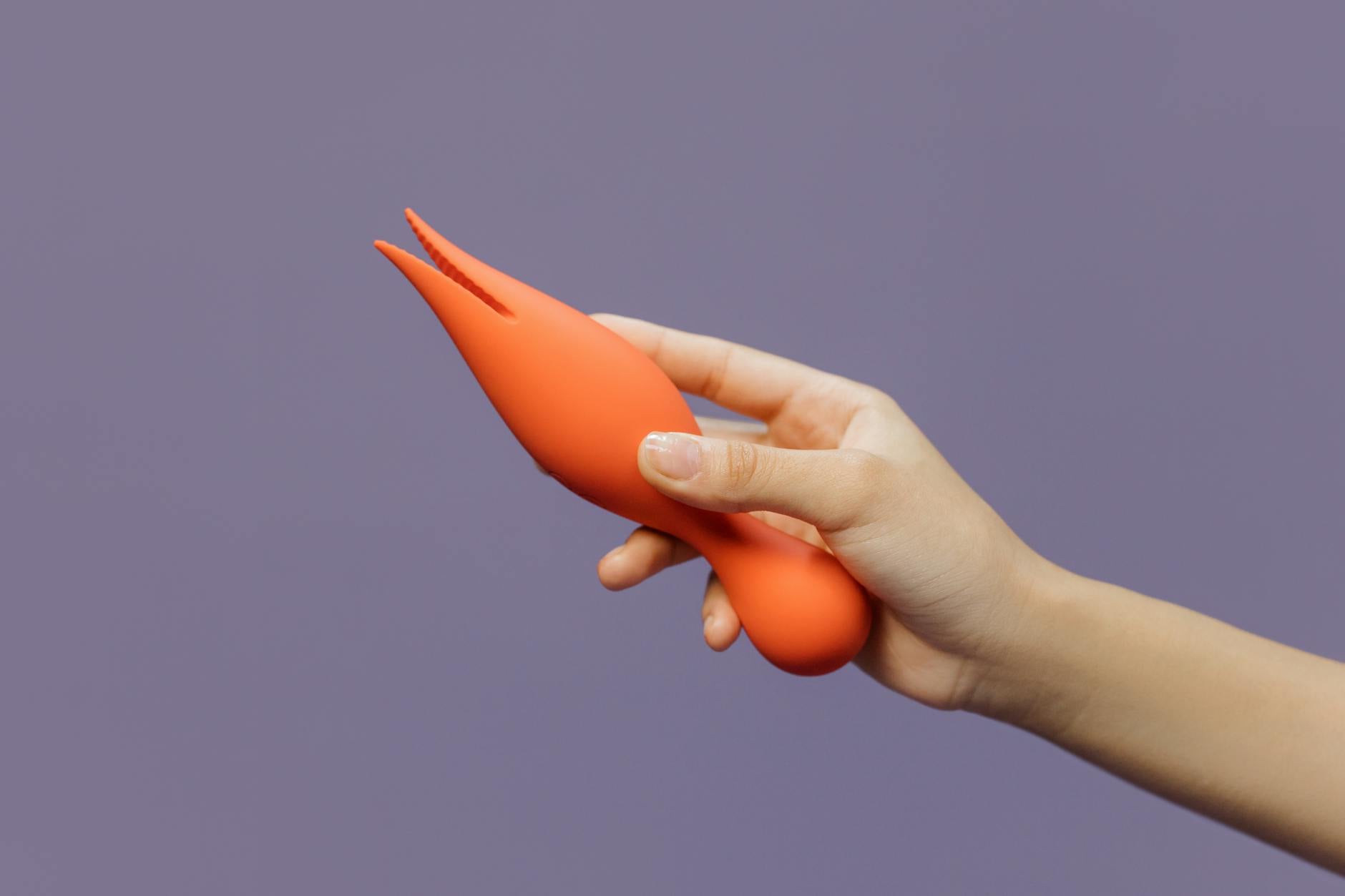
Here's what nobody tells you about delayed orgasm
You're not broken. Your body isn't wired wrong. But something in the pathway between arousal and release has gotten stuck, and straight vibration alone isn't unsticking it. This is actually more common than you'd think. Studies suggest between 10 and 40 percent of people with vulvas experience some degree of difficulty reaching orgasm, and many of them have tried everything.
The problem isn't your capacity for pleasure. It's the mismatch between how you're being stimulated and what your nervous system actually needs to cross the finish line.
Why traditional vibrators stop working for some people
Standard vibrators work by creating rhythmic oscillation. Your clitoris has about 8,000 nerve endings, and at first, that vibration activates them beautifully. But here's the catch: your nervous system adapts. After a while, those same vibrations feel less intense, less surprising, less capable of pushing you over the edge. You're not numb. Your body is just used to the signal.
This adaptation is called habituation, and it's a feature of your nervous system, not a flaw in you. It's the same reason you stop noticing background noise or the weight of your clothes. Your brain learns to filter out repeated, predictable stimulation.
Lemon suction vibrators work differently. Instead of vibration alone, they create a rhythmic pulse of gentle suction combined with vibration. That dual action is novel enough to prevent habituation, and it activates a different set of nerve pathways altogether.
The neuroscience of suction vs. vibration
Let me break down what's actually happening when you use a lemon suction vibrator:
Vibration activates the rapid-fire neurons in your clitoris. It's constant, it's fast, and it's directional. Your brain maps that stimulus quickly. Suction, on the other hand, creates a pressure change that stimulates deeper tissue and triggers a different neural response. It's less about frequency and more about sustained pressure and release.
When you combine the two, you're essentially giving your nervous system two conversations at once. The suction creates a broader, deeper sensation while the vibration adds precision and intensity. Your brain can't habituate to both simultaneously, which means the sensation stays novel, stays engaging, and stays capable of building toward release.
This is why people who've struggled with delayed orgasm for years often report that their first experience with a lemon clitoral vibrator feels shockingly effective. They're not experiencing the slump partway through that used to derail them. The stimulation doesn't plateau.
How delayed orgasm gets tangled up with stress and expectation
Here's where the mechanics meet the mind: difficulty reaching orgasm isn't usually just physical. It's often a combination of what's happening in your body and what's happening in your head.
If you've spent months or years unable to reach orgasm, you develop what therapists call "performance anxiety." You're not thinking about sensation. You're thinking about whether it's going to work this time. That anxiety activates your sympathetic nervous system, the fight-or-flight response, which is literally the opposite of what you need. Your body needs parasympathetic activation, the rest-and-digest state. Tension in the pelvic floor, shallow breathing, a sense of "come on, work" rolling through your head. That shuts everything down.
A lemon vibrator can help interrupt this cycle, but not by magic. It helps because the novelty, the different sensation, and the fact that it often works more effectively can start to rebuild your sense of possibility. You're not gripping and performing anymore. You're surrendering to a sensation that's actually strong enough to carry you through.
What changes when you switch to lemon suction stimulation
I've worked with many clients who've made this shift, and the pattern is consistent. Here's what typically happens:
First week: The sensation feels strange, maybe even intense or slightly uncomfortable at first. That's normal. Your body isn't used to suction, and your nervous system is recalibrating.
Second to third week: The pattern starts to feel familiar, but it's still working. There's no plateau. The sensation builds consistently.
Fourth week onward: Many people experience their first successful orgasm in months or years. Not every session, but enough to prove it's possible. That proof matters. It rewires the expectation.
The lemon suction vibrator isn't a magic wand. It's a different pathway. And sometimes all your nervous system needed was a different path to get where it wanted to go.
Practical setup for success with suction stimulation
Technique matters less than you'd think, but timing and approach matter a lot:
Start with plenty of warm-up time. Don't jump straight to the clitoris with suction. Spend 10 to 15 minutes with foreplay, either solo or partnered, to build baseline arousal. Your parasympathetic nervous system needs time to settle in and your genital tissue needs blood flow.
Start on a lower suction level. The Lem and other lemon vibrators have adjustable settings for a reason. Begin at level one or two, even if it feels gentle. Let your body acclimate. You can increase intensity as arousal builds.
Breathe. This sounds absurdly simple, but shallow breathing keeps you in sympathetic activation. Breathing deeply, especially longer exhales, shifts you into parasympathetic mode. That's where orgasm lives.
Use generous lubrication. Even if you produce your own, extra lubricant reduces friction, allows the suction seal to work more effectively, and generally makes the experience more comfortable. Water-based lube is safest with silicone toys.
Give yourself permission to not reach orgasm every time. Paradoxically, releasing the goal sometimes gets you closer to it. If you're using the lemon vibrator for 20 minutes and it's feeling good but not pushing toward climax, that's still a win. You're building positive associations with pleasure that isn't goal-directed.
When to layer in partner involvement
If you have a partner, bringing a lemon vibrator into partnered sex can feel awkward at first. Most people worry their partner will feel replaced or inadequate. That's not how it works.
The most successful approach is honest conversation before you try anything. "I've been struggling with reaching orgasm, and I want to try something different. I want you there with me. This isn't about you not being enough. It's about me understanding my own body better." That's the frame.
Then during the experience, your partner can hold the vibrator, add their touch elsewhere, maintain eye contact, or simply be present. Their involvement changes the entire emotional tone. You're not alone in a locked room performing for yourself. You're in connection with someone, exploring something together.
Many people find that using a lemon vibrator with a partner actually deepens intimacy, because you're communicating about sensation and desire in real time. That conversation is everything.
Medication, hormones, and why they matter here
Some medications genuinely do make orgasm harder. SSRIs, certain blood pressure medications, and some antihistamines can all dampen sexual response. That's not a character flaw. That's chemistry.
If medication is involved, talk to your prescriber. Sometimes a timing shift (taking it at night instead of morning) helps. Sometimes a dose adjustment is possible. Sometimes you need to accept that this medication is helping you in one way while creating friction in another, and that's a trade-off you need to make with full information.
Hormonal shifts matter too. Estrogen support, whether through birth control, HRT, or natural fluctuation, affects genital blood flow and tissue sensitivity. If you've recently changed hormonal status, your body might just need time to recalibrate, and a lemon clitoral vibrator gives you a tool while that's happening.
But here's the thing: medication and hormones don't mean you can't have good orgasms. They mean you might need different tools or different conditions to get there. A lemon vibrator is often that tool.
Wrapping up: it's not you, it's the pathway
Delayed orgasm or anorgasmia feels personal. You feel like something is wrong with your body or your mind. But in most cases, what's actually happening is that your nervous system needs a different stimulus to bridge from arousal to release. A lemon suction vibrator often provides exactly that.
Start without pressure. Be patient with the adjustment period. Learn proper technique for clitoral stimulation to avoid habituation all over again. And if you've been struggling for a long time, remember that reaching orgasm isn't the goal. Pleasure, presence, and reconnection with your own body are the actual wins.
If you're working through this with a partner or therapist, I encourage you to be honest about what you're trying and how it's working. Sexuality is rarely a solo project, even when you're using a toy alone. The emotional and relational dimensions matter as much as the mechanics. You deserve support while you figure out what your body needs.
People also ask
Can a lemon vibrator help if you've never had an orgasm before?
Yes, often. If you've never experienced orgasm, it's typically not because you're broken. It's usually because you haven't found the right combination of stimulation, mental state, and conditions yet. A lemon vibrator's suction-plus-vibration action covers more nerve pathways than standard vibration, which increases the odds of finding the pattern that works for you. Start with low pressure, plenty of time, and zero expectation. Many people report their first orgasm after switching to clitoral suction devices.
How long does it take to feel a difference with a lemon vibrator if you have delayed orgasm?
Most people notice a difference in sensation within the first one or two uses. The actual ability to reach orgasm can take longer, usually two to four weeks of consistent use. That timeline depends on how long the delayed orgasm has been happening, whether medication is involved, and your mental state around sex. Patience here matters more than speed.
Is it normal to need a stronger suction setting over time?
It can happen, but it's not inevitable. Some people find their sweet spot on a lower setting and stay there indefinitely. Others gradually increase intensity as they explore. The key is to rotate between different settings and patterns so your nervous system doesn't adapt to just one stimulus. Using the same setting every single time can lead to habituation all over again.
What if a lemon vibrator still doesn't lead to orgasm?
Then there's likely another layer to explore. That could be medication side effects that need adjustment, hormonal imbalance, trauma or anxiety that needs therapeutic work, or simply that you need a different tool altogether. A lemon vibrator helps a lot of people, but it's not a universal fix. If three to four weeks of consistent, relaxed use don't shift anything, talking to a sex-positive therapist or doctor is the next step.
Can you use a lemon suction vibrator if you have vulvodynia or clitoral hypersensitivity?
Carefully, yes. Many people with these conditions actually benefit from lemon vibrators because you can use lower suction settings and the sensation is different enough from standard vibration that it doesn't trigger pain the same way. Start with the lowest setting, plenty of lube, and very short sessions. If pain appears, stop and try again another time. If pain persists, consult the guide on lemon vibrators for sensitive skin conditions.
Is there a psychological component to delayed orgasm that a vibrator can't fix?
Absolutely. A vibrator is a tool, not a therapist. If delayed orgasm is connected to trauma, trust issues in your relationship, or deep anxiety, those need attention alongside the physical exploration. Many people benefit from working with a therapist who specializes in sexual health while also experimenting with new tools like a lemon vibrator. Both matter. Neither one alone is the whole answer.
Sources and further reading
The neuroscience of clitoral stimulation draws from research on sensory adaptation and the role of novelty in sexual response, documented in studies on the physiology of orgasm. Information on suction-based devices and their effectiveness for anorgasmia comes from emerging research in sex toy design and user experience studies. Consultation with certified therapists and sex educators informed the relational and psychological dimensions.
If you want to explore this further with expert guidance, reach out to us. We're here to help you find what works.