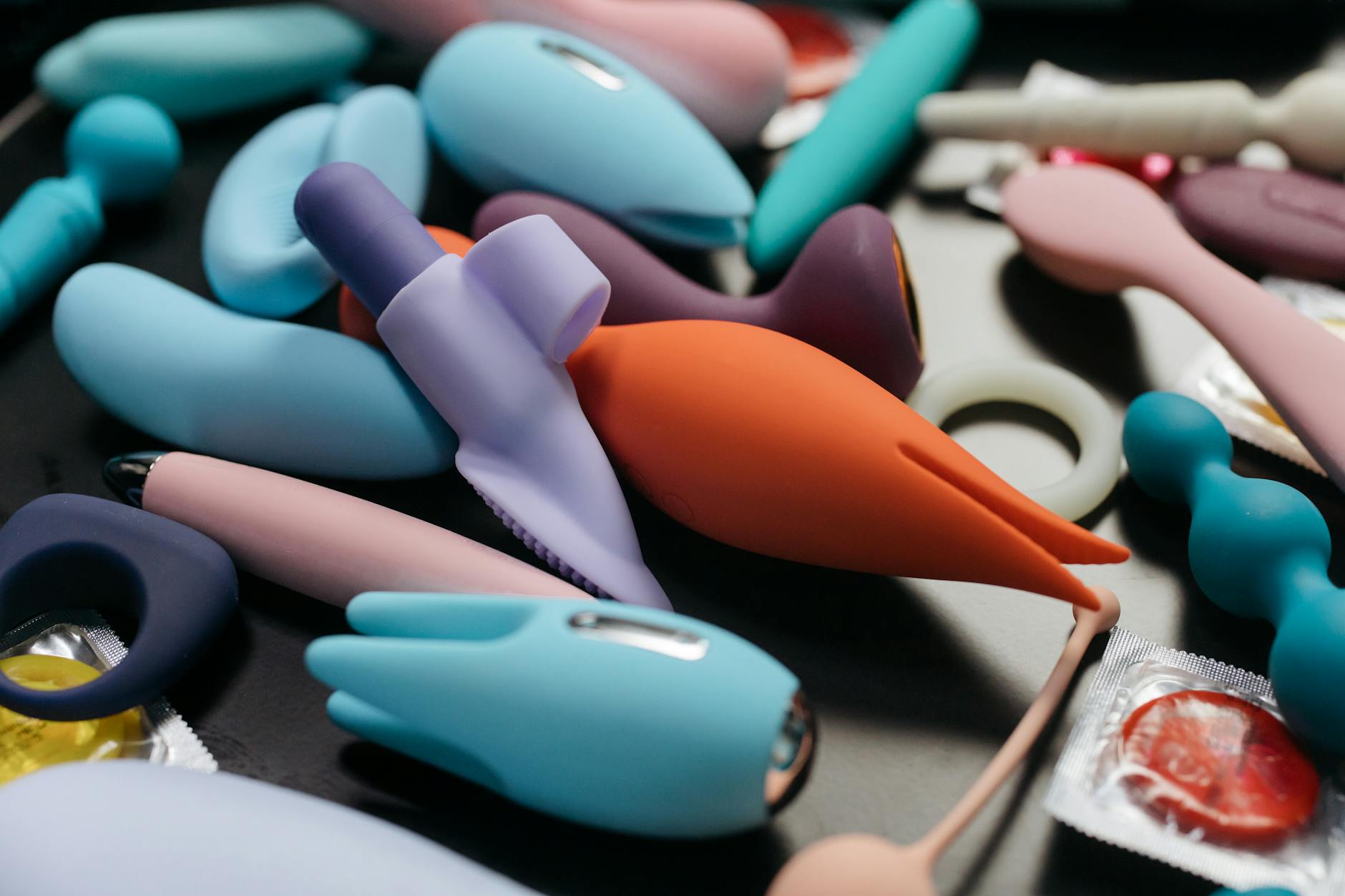
Why Lemon Vibrators Feel So Good: The Science of Pressure and Patterns Explained
Let's be real. Traditional vibrators have been the standard for decades, but when you try a lemon clitoral vibrator for the first time, something feels immediately different. It's not just marketing hype. The sensation is actually distinct because the mechanism is fundamentally different.
A lemon vibrator doesn't buzz. It pulses gentle suction that creates a sensation some people describe as rhythmic pressure, rhythmic release, and then a flush of sensation that builds in ways a simple vibration just can't replicate. If you've never experienced this, the difference can feel almost shocking. And if you have, you probably already know why you came back for more.
Here's what's actually happening in your body, and why lemon vibrators are becoming the go-to choice for people who want to understand their own pleasure a little better.
How Suction Stimulation Actually Works on Your Body
Your clitoris isn't just the tiny external bump you might think it is. It's an organ with a wishbone shape that extends internally—about four to five inches in total, with thousands of nerve endings concentrated at the tip. When you use a traditional vibrator, you're activating the surface nerves through direct contact and vibration frequency.
Lemon vibrators operate on a different principle entirely. They use gentle pulsing suction to create what feels like a soft pulling sensation. This suction reaches deeper layers of tissue and activates a different subset of nerve endings than those responding to vibration alone. Think of it this way: vibration is like tapping your shoulder repeatedly. Suction is like someone gently drawing their fingertip across your skin and then pressing in slightly. Completely different sensation, completely different neural pathway.
When suction engages the clitoral tissue, it increases blood flow to the area much more rapidly than vibration does. That increased engorgement makes the tissue more sensitive and responsive. Each pulse of the suction pattern then hits those newly engaged nerves with slightly more intensity than they'd experience with a vibrator at the same speed setting. It's a compounding effect.
That's why so many people report that lemon vibrators help them reach orgasm faster, or orgasms that feel more full-bodied and intense. The suction is essentially priming the tissue for response and then delivering stimulus in a rhythm that matches how arousal naturally builds.
The Pattern Question: Why Some Rhythms Feel Better Than Others
Not all suction patterns are created equal. A lemon vibrator typically offers several pattern options, and which one feels best to you depends on a few things: your baseline sensitivity, where you are in your cycle (if applicable), and honestly just what your nervous system is feeling that day.
The pattern that works at the slowest setting (usually around 2000 pulses per minute on devices like the Lem vibrator) tends to feel more like a gentle build. It gives your arousal time to develop. For people who need longer warm-up time or who experience anxiety during sex, this pattern is often the sweet spot. There's no rush.
Mid-range patterns (around 3000-4000 ppm) hit that balance between control and intensity. You get enough rhythm to feel sustained stimulation without it being overwhelming. This is where most people find their favorite.
The highest patterns can feel almost staccato—rapid pulses that create a kind of vibrating suction experience that's partway between a traditional vibrator and pure suction. For some people, this is the only pattern that gets them there. For others, it's too much. That's completely normal.
What matters is that you actually get to experiment. A lot of people don't realize that pattern preference is legitimate. You're not broken if the fastest setting feels weird. You might just need the medium rhythm, or you might need to use the device differently (angle, position, pressure) to find what works.
Pressure Point Sensitivity and Why Angle Matters More Than You'd Think
Here's something most people never talk about: the angle at which you use a lemon clitoral vibrator changes everything.
The clitoris has a slight hood of skin that covers most of it. When you come at the area head-on with direct pressure, you're sometimes stimulating through that hood, which can feel less intense or even uncomfortable. But if you angle the device slightly, so the suction cup is pulling more on the visible portion or the sides of the clitoral bulb, the sensation can shift from uncomfortable to absolutely electric.
That's because you're now directly engaging the most nerve-dense portion of the external clitoris. The difference between "this feels okay" and "I can't believe how good that feels" is sometimes literally a 15-degree angle adjustment.
Pressure also plays a role that doesn't exist with traditional vibrators. With the Lem vibrator or any lemon sucker, you control how much contact there is between the silicone cup and your skin. Light contact feels teasing and can help with arousal buildup. Moderate contact feels full and satisfying. Heavy contact can feel almost consuming. Again, what you prefer depends on the day, your cycle, your partner dynamics, and what you're trying to achieve.
For people discovering their pleasure for the first time, experimenting with angle and pressure is honestly more important than trying all the patterns. Get the angle right, and the patterns become tools you're choosing from. Get the angle wrong, and the best pattern in the world won't help.
The Orgasm Difference: Why Suction Creates a Different Kind of Release
One of the most commonly reported differences between lemon vibrators and traditional vibrators is the character of the orgasm itself.
With a standard vibrator, you often experience localized sensation that builds to a peak and releases. It's focused. With a lemon clitoral vibrator, many people report that orgasms feel more expansive. The sensation spreads further up into the body, and the release feels less like a point and more like a wave.
This happens because suction engages more of the internal clitoral structure. You're not just stimulating the external tip—you're pulling on the entire bulb and the internal wishbone shape. When that all releases at once, the sensation radiates through the pelvic floor, up toward the belly, sometimes even into the thighs and lower back.
It's not better or worse than a traditional vibrator orgasm. It's different. And for many people, that difference is why they stick with lemon vibrators once they've tried them. The intensity isn't necessarily higher, but the sensation feels more complete.
There's also a refractory element worth understanding. Because suction engages tissue a bit differently, some people find they can experience multiple orgasms more easily with a lemon vibrator than they could with buzzing alone. That's not universal, but it's common enough that it's worth testing if you're curious about your own capacity.
How Your Nervous System Responds to Suction Versus Vibration
On a neurological level, what's happening is that your brain is receiving a different signal pattern.
Vibration creates rapid, continuous sensory input. Your nervous system processes it as sustained stimulation. Over time, your nerve endings can habituate—meaning they get so used to the signal that they respond less intensely. That's why some people need to keep increasing vibration intensity over time.
Suction, with its pulsing rhythm and the rising and falling of pressure, creates a pattern that's closer to the kind of touch a partner might provide. It's rhythmic but not continuous. That variation means your nerve endings don't habituate as quickly. You can use the same device at the same setting for years and still experience the same intensity of sensation.
This is why people often gravitate toward lemon vibrators for frequent use and prefer them for longer sessions. The novelty and variation in the stimulus means your body stays responsive. And from a relationship perspective, if you're using a lemon vibrator with a partner, the rhythm itself can synchronize with your body's natural arousal buildup in ways that keep intimacy feeling connected rather than mechanical.
The Temperature and Texture Factor
Last thing: the physical properties of the device matter more than you might expect.
Most lemon vibrators are made from silicone, which has a warmth to it when it makes contact with skin. That warmth adds a sensory layer that plastic or harder materials don't provide. Your skin immediately registers "this is soft, this is warm," which primes your nervous system for pleasure before any suction even happens.
The texture of the silicone also affects sensation. A smooth surface feels different than a slightly textured one. Most quality lemon vibrators are designed with a smooth finish that maximizes contact and suction capability, but if you've ever noticed that texture matters when a partner touches you, the same principle applies here.
For cleaning and longevity, this matters too. Learn how to care for your device properly so that texture stays in good condition and suction capability remains strong over time.
Combining Lemon Vibrators With Partner Play
One of the practical reasons lemon vibrators have become so popular is that they work in partnered sex without completely replacing the partner's involvement.
With a traditional vibrator, the intensity and the focus can sometimes crowd out other sensations. With a lemon clitoral vibrator, because the sensation is concentrated but not loud and the device is often smaller, there's room for a partner to be involved simultaneously. They can provide penetrative stimulation, touch other parts of your body, talk to you, or just be present and responsive to what you're experiencing.
For couples navigating changes in their intimate life—whether that's due to life stage, stress, health factors, or just drift—lemon vibrators often become a bridge tool. They're explicit about being a pleasure device (not a replacement), they work within partnered sex rather than instead of it, and they often help people communicate better about their own bodies because the distinct sensation makes it easier to articulate what feels good.
If you're considering introducing a toy into partnered sex, a lemon vibrator is often less intimidating than other options precisely because the sensation is novel enough to feel exciting rather than threatening.
FAQ: Common Questions About Lemon Vibrators and Sensation
Why does my lemon vibrator feel numb after a few minutes of use?
This is usually a sign that your pressure point is off. Move the angle slightly—even 10-15 degrees can change which nerve endings you're engaging. If that doesn't work, try using it over the clothing rather than directly on skin for a few uses, then gradually reduce layers. Sometimes your nervous system just needs the stimulus presented at a slightly different intensity to stay responsive. It's not that your body is broken; it's just that suction requires a bit more precision in placement than a traditional vibrator does.
Can I use a lemon vibrator if I have a very sensitive clitoris?
Absolutely, but start with the lightest pressure and the slowest pattern. Use it over a thin layer of fabric if direct contact feels too intense initially. Many people with high sensitivity actually find that lemon vibrators end up being less irritating long-term than traditional vibrators because the suction distributes sensation differently. Give yourself a few uses to acclimate before deciding it's not for you.
Why does my partner prefer watching me use a lemon vibrator versus other toys?
Partially it's visual—the device is often beautiful and smaller, less imposing than wand vibrators. But there's also something about the pattern of your responses that changes. Because suction builds sensation differently, your body often responds with more visible arousal (flushing, movement, breathing changes). That visibility and responsiveness can make partnered pleasure feel more interactive, even though you're the one using the device. It's less about the toy and more about how it changes your actual experience, which your partner can then witness and respond to.
Can I switch between vibration and suction devices, or will I get desensitized to one?
You can absolutely switch between them without building permanent tolerance. Because they stimulate different nerve pathways, using a traditional vibrator one day and a lemon vibrator the next doesn't create the kind of habituation that happens when you use the same exact stimulus repeatedly. This is actually a reason many people maintain a small collection. Variety keeps pleasure feeling fresh.
What's the difference between a lemon vibrator and an air-pulsing device?
They're essentially the same mechanism with slightly different marketing terminology. Both use gentle suction and pulsing patterns rather than traditional vibration. The Lem vibrator from Hello Nancy is a lemon-shaped air-pulse device, meaning it works on the suction principle rather than buzzing. Some people use the terms interchangeably, and that's accurate—they're describing the same underlying technology of rhythmic pressure release rather than vibration frequency.
How do I know if a lemon vibrator is right for me?
If you've ever felt like traditional vibrators were either overstimulating or not quite hitting the right sensation, a lemon clitoral vibrator is worth trying. If you have a longer refractory period and want to explore whether multiple orgasms are possible for you, it's worth trying. If you're in a partnership and want something that works alongside partner sex rather than replacing it, it's worth trying. The worst that happens is you discover it's not your preference, and you move on. The best case is you find a tool that completely changes how you experience pleasure.
The Bottom Line
Lemon vibrators feel different than traditional vibrators because they operate on a fundamentally different principle. Instead of vibration frequency, they use rhythmic suction to create sensation that engages deeper tissue, builds arousal differently, and produces orgasms that many people experience as more expansive and full-bodied.
That difference isn't universal—some people will always prefer traditional vibration, and that's completely legitimate. But for the significant number of people discovering that a lemon clitoral vibrator (like the Lem) changes their experience, the reason isn't mysterious. It's physiology and nerve engagement working exactly as intended.
Your pleasure deserves to be understood, not just experienced. And if a lemon vibrator helps you understand your own body a little better, that's information worth having.