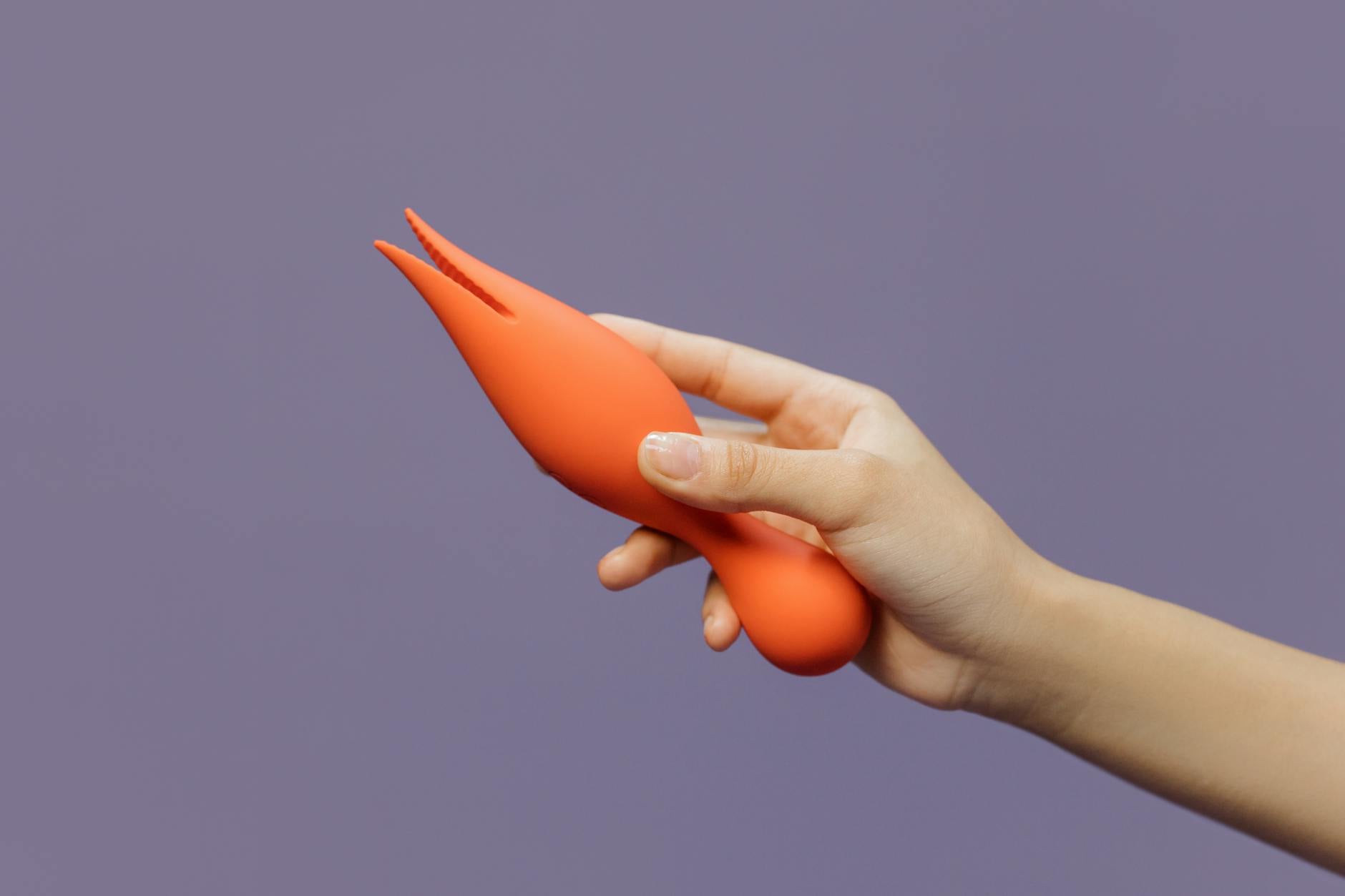
Let's start with what reactive desire actually is
If you're someone whose body needs physical contact to wake up sexually, you have what sex researchers call reactive desire. That's not a flaw. It's not something to fix. It's actually the majority experience. Most people with vulvas need direct stimulation to build arousal, and many people with any anatomy function this way too.
But here's the part nobody explains: if your arousal builds through touch rather than through fantasy or anticipation, lemon vibrators work fundamentally differently than they do for spontaneous-desire people. Knowing this changes everything about how you use them.
How reactive desire changes the math
Spontaneous desire works like this. You think about sex, your body responds, then you seek touch. It's a neat chain. Reactive desire works in reverse. You receive touch, your nervous system registers it, and then arousal builds.
This matters because most vibrator advice assumes you're already somewhat aroused when you turn it on. Articles talk about finding patterns that feel good, building intensity gradually, or using it as foreplay. Fine advice if you're starting at a 5 on the arousal scale.
But if you're starting at a 0 or 1 because your body doesn't self-generate arousal, you need a tool that's powerful enough to create the sensation that wakes you up. That's where lemon clitoral vibrators shine. The suction-based technology doesn't require existing arousal to feel remarkable. It generates that initial spark.
Why suction-based lemon vibrators work better for reactive desire
Think about the difference between two types of touch. A traditional vibration is rapid oscillation. It feels good if you're already somewhat sensitive. But suction is a pulling sensation. It works on different nerve endings. It creates a distinct kind of stimulation that doesn't depend on baseline arousal.
When you have reactive desire, your tissue starts less engorged, less sensitive. A standard vibrator against less-sensitive tissue can feel muffled or even uncomfortable. But suction pulls blood into the area, literally increasing sensitivity as you use it. You feel the effect within seconds. The lem vibrator's gentle suction creates that initial awakening that reactive-desire bodies need.
The warm-up timeline is different
If you've ever felt like you're slow to arousal, you've probably been told the solution is "longer foreplay." Sure, but there's a threshold question: how do you transition from not-yet-aroused to aroused enough that longer foreplay feels good?
For reactive-desire people, the answer is often direct clitoral stimulation from the start, not extended kissing or touching elsewhere. Your body is wired to respond to direct input. Most lemon sexual toys, especially air-pulse devices, deliver that direct input without requiring you to already be turned on.
Most people I work with who have reactive desire report that they can transition from neutral to genuinely aroused in 3 to 5 minutes using a lemon clitoral vibrator, whereas manual stimulation alone might take twice that. The intensity and targeting matter.
Pattern selection for reactive desire is its own skill
The lem vibrator offers multiple patterns and intensities. If you have reactive desire, your pattern preference might surprise you. Many people assume they'll want gentler patterns first, then build to stronger ones. But reactive-desire bodies often skip the gentle patterns entirely.
You're not avoiding gentle patterns because you're numb or have high pain tolerance. You're avoiding them because they're inefficient. Your body needs a certain threshold of sensation to register arousal. Below that, stimulation feels like static noise. Above it, it suddenly clicks.
This doesn't mean jumping straight to the highest intensity. It means finding the pattern that creates that click. For some people, that's a mid-range pulsing pattern. For others, it's the gentler suction at a higher frequency. The trick is experimenting without expectation until you find your threshold.
Reactive desire with a partner shifts the logistics
Here's where it gets real. If you have reactive desire and a partner who doesn't, there's often a mismatch in how sex initiates. They might want to kiss and touch for 20 minutes before anything else happens. Your body is saying, "Actually, I need you to touch me directly for about 3 minutes, then arousal will build from there."
Using a lemon vibrator with a partner can actually bridge this gap. One option is to use it alone for that initial 3 to 5 minute window before your partner joins. You arrive at aroused, they arrive at turned-on, and you meet in the middle. Another option is for them to be present while you use it, which some people find even hotter because it's collaborative rather than separate.
The key thing is naming it. "I need a few minutes of direct stimulation to get my body in the game" is different from "I don't want sex" or "Something's wrong with me." It's just how your particular nervous system works.
Medication and reactive desire sometimes go hand-in-hand
Some medications that affect arousal (antidepressants, blood pressure meds, certain antihistamines) don't always destroy sexual function. Sometimes they shift you from spontaneous desire to reactive desire. Or they dampen reactive desire, making it take longer to build.
If you're on medication and notice that arousal requires more stimulation now, a lemon clitoral vibrator is often the most effective tool because of its intensity and directness. It's not about having more sex. It's about having the kind of sex your current body can actually experience. That's practical self-care.
The difference between numbness and reactive desire
This is important because I see people confuse them. Numbness is reduced sensation or difficulty with any arousal, even with direct stimulation. Reactive desire is normal sensitivity that just doesn't fire up without touch.
If you can feel sensation fine but just don't experience spontaneous arousal, you have reactive desire and you're normal. If you're using a lemon vibrator and feeling nothing even with direct stimulation on different patterns, that's numbness, and there are different tools and strategies for that. Don't confuse the two.
Scheduling sex when you have reactive desire
One honest thing about reactive desire: spontaneous sex is harder. Your body isn't wired to get ready on the spot. But here's what actually works. Scheduled sex. Not because it's unromantic, but because when you know sex is coming, your nervous system can prepare differently. You might think about it earlier in the day, notice your body shifting, arrive more ready.
With a lemon clitoral vibrator in the mix, scheduled sex becomes genuinely easier because you have a tool that works reliably once you're both ready to start. You're not depending on luck or perfect conditions.
How to talk about this with your partner
A lot of reactive-desire people have internalized shame about needing more time or more direct stimulation. The message they got was that real desire is spontaneous. If yours isn't, something's wrong with you.
It's not. About 70% of people with vulvas have reactive or mixed desire. Many people of any gender function this way. Your body isn't broken. You're just not the minority whose arousal self-generates.
When you're talking to a partner about this, focus on what works rather than what doesn't. "I love it when you touch me directly first, then we can do other things" is more useful than "I can't get aroused quickly." One is a roadmap. The other sounds like a deficit.
Making lemon vibrators work for your timeline
If you have reactive desire, you don't need to force yourself to use tools in the way that works for spontaneous-desire people. Use the lemon vibrator as your starting point, not your finale. Use it early, use it often, use it to transition from neutral to engaged. Your body isn't slow. It's just wired for a different sequence.
The best part about reactive desire, once you stop treating it as a problem, is that it's often incredibly consistent. You know what works. You can rely on it. That's a feature, not a bug.
FAQ
What's the difference between reactive desire and low libido?
Low libido usually means reduced interest in sex altogether, even after arousal builds. Reactive desire means your interest builds through touch. You might want sex plenty, your body just doesn't advertise it through spontaneous arousal. Very different thing.
Do lemon clitoral vibrators work for reactive desire faster than traditional vibrators?
Often yes, because suction-based stimulation doesn't require existing arousal to feel effective. But everyone's different. Some people with reactive desire respond beautifully to suction. Others prefer pattern-based vibration. Trying both matters.
Can reactive desire change based on stress or life circumstances?
Absolutely. Stress, relationship shifts, medication changes, life transitions can all influence whether you experience reactive or spontaneous desire, or a mix of both. It's not fixed. But the tools that work when you're in reactive-desire mode are worth keeping in your toolkit.
Is reactive desire something to bring up with a doctor?
Not unless it's distressing or new. If you've always had reactive desire and sex works fine once you start, there's nothing to treat. If you recently shifted to needing much more stimulation and it bothers you, talking to a provider who understands sexual response is worth it, especially if medication changes coincided with it.
Can a partner with spontaneous desire understand reactive desire?
Yes, but it helps to explain it clearly. "My body doesn't give me a heads-up that it wants sex. I need to be touched first, then arousal builds" is concrete. They can work with that. Many partners find it's actually easier than spontaneous desire because there's a clear pathway to connection.
Does reactive desire mean longer lasting orgasms or better orgasms?
Not necessarily. Your orgasms are whatever they are. But because reactive-desire bodies often have a clear on-switch once stimulation starts, many people find their orgasms feel more intentional, more focused. You're not interrupted by intrusive thoughts. You're entirely present.
The bottom line
You don't have slow arousal. You have a nervous system that responds to input rather than self-generating output. Lemon clitoral vibrators, with their suction-based design and range of intensities, work beautifully for that wiring. Use them as your opening move, not your finale. Name what you need with your partner. Stop comparing your timeline to someone else's. Your pleasure is just as valid. It just has a different starting point.
If you want to dive deeper into how to talk about this with a partner, check out how to use a lemon vibrator with a new partner without awkwardness. Or if you're curious about how lemon vibrators work better during low libido phases, that's another angle on the same nervous-system question.
Your body works the way it works. The right tools and the right information make all the difference.