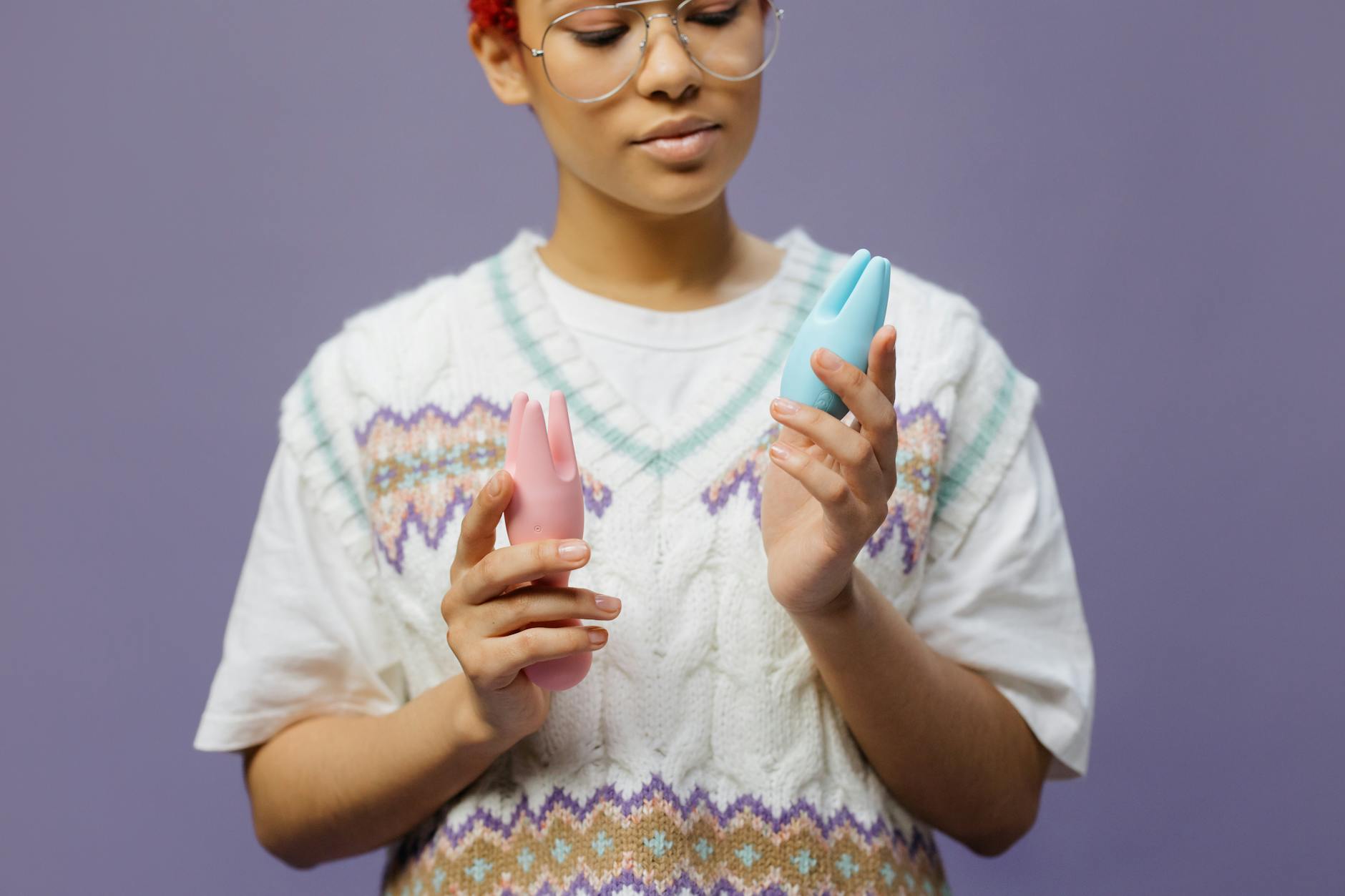
The perimenopause surprise nobody warns you about
Your go-to vibrator stops working the same way. Not because it's broken, not because you're broken. Something real is shifting in your body, and it's worth understanding.
Perimenopause typically runs 4-10 years before your last period. During this time, estrogen and progesterone don't decline in a straight line. They roller-coaster. One week your body feels exactly like it always has. The next week, the same lemon vibrator at the same setting feels weirdly muted or almost too much.
What's actually happening hormonally
Your ovaries are winding down, but they're not winding down evenly. Some months they send out a normal estrogen surge. Other months the signal gets confused. This matters for pleasure because estrogen directly affects blood flow to the clitoris, vaginal lubrication, and nerve sensitivity.
Progesterone is also on its way out, and this is huge. Progesterone acts like a calmant on the nervous system. As it drops, your baseline anxiety often goes up, which makes it harder to relax into arousal. You might need more warm-up time, or your mind might interrupt at the exact moment your body is getting somewhere.
Testosterone, which people with ovaries produce in smaller amounts than people with penises but still critically for desire, also becomes less stable. Some weeks you'll feel wildly into it. Other weeks you'll touch yourself and feel almost nothing. That's not low libido. That's hormonal flux.
Why lemon vibrators feel different right now
Here's the specific part: lemon suction technology works by creating a gentle vacuum that pulls tissue into the suction cup, stimulating a much larger nerve network than direct vibration alone. During perimenopause, this matters more.
Direct vibration can feel too intense when tissue sensitivity is high and estrogen is dipping. The stimulation can almost numb the area instead of building arousal. Suction, by contrast, distributes pressure across a wider area and works with your body's natural response rather than against it.
Most people notice that lemon vibrators start working better during perimenopause, not worse, once they adjust their approach. You might have loved traditional vibrators for years, then suddenly a lemon clitoral vibrator just clicks in a way nothing else does.
The sensitivity swing through your cycle
During perimenopause, your cycle becomes irregular but the hormonal pattern is still there, just messier. Right before ovulation (if ovulation is still happening), estrogen peaks. During this window, you'll likely want lighter stimulation. You might need to drop from setting 5 on your lemon vibrator down to setting 2-3 because the increased blood flow to your clitoris makes everything feel amplified.
After ovulation, when progesterone rises, arousal often takes longer to arrive. You might need to start at setting 1 and build up more slowly, or spend 20-30 minutes in foreplay instead of 10.
In the later follicular phase, when hormones are at their lowest, some people feel almost nothing. This is when lemon suction technology really earns its place. The steady, pulsing vacuum sensation cuts through numbness in a way that doesn't feel aggressive.
The lubrication piece nobody mentions
Estrogen keeps vaginal tissue thick and well-lubricated. As it fluctuates, lubrication becomes less reliable. Some days you're fine. Other days, the same activity that usually flows smoothly creates friction.
This directly affects how your lemon vibrator feels. If you're using it on lower-lubrication days, the suction becomes more noticeable (potentially uncomfortable) and the device might create minor suction bruises over time. Adding water-based lubricant changes everything. The lemon vibrator glides better, the suction feels smoother, and the whole experience becomes about pleasure instead of managing friction.
Keep a small bottle of lube next to your bed during perimenopause. You'll go through more of it than you used to, and that's completely normal.
Arousal ramp-up gets longer, and that's okay
During your reproductive years, you might have been able to go from zero to aroused in 5-10 minutes. Perimenopause often stretches that to 20-30 minutes or longer, especially on lower-estrogen weeks.
This isn't a problem. It's actually an opportunity. Longer warm-up time means more exploration, more chance to notice what's actually working instead of rushing through to orgasm. Many people report that the quality of their orgasms improves once they stop fighting the slower ramp-up and actually settle into it.
With a lemon vibrator, longer foreplay pairs beautifully. Start on the lowest setting, give yourself permission to spend 15-20 minutes just enjoying the sensation without the goal of coming. Often, once you relax into it, the orgasm shows up more intensely than when you were rushing.
Partner dynamics shift too
If you're with a partner, they might notice your arousal pattern has changed and misinterpret it as loss of interest. It's not. Your body is just operating on a different timeline. A lemon clitoral vibrator can actually help here because it gives you an independent way to reach arousal without relying on a partner's rhythm or pressure.
Many couples use a lemon vibrator as a bridge during perimenopause: your partner can focus on touch, kissing, and presence while the lemon suction handles the genital stimulation part. This actually deepens intimacy because nobody is waiting for the other person's body to cooperate.
When you might need a different approach entirely
Some people sail through perimenopause with minimal changes. Others find that nothing feels right anymore and need to completely rethink their pleasure routine. If your lemon vibrator suddenly feels too intense even on the lowest setting, or if you're experiencing pain, that's worth discussing with a menopause-informed doctor. Genitourinary syndrome of menopause is real, treatable, and common.
If desire has completely flatlined and stays that way for months, testosterone therapy is worth exploring. It's not a magic fix but for the right person it can restore a missing element that no vibrator can replicate.
The practical adjustment checklist
If your lemon vibrator feels off during perimenopause, try this order:
First, add lubrication to every session. Water-based, always.
Second, extend warm-up time to 15-20 minutes minimum before using the vibrator.
Third, start on the lowest setting and resist jumping up too fast. Let your body wake up gradually.
Fourth, track what feels best across your cycle using a basic calendar. You'll probably see a pattern emerge within 2-3 months that tells you exactly which settings work best during different weeks.
Fifth, experiment with patterns. Some lemon vibrators offer multiple pulsation modes. During high-sensitivity weeks, you might prefer a steady hum to a pulsing pattern.
Sixth, consider timing. Some people find morning arousal is easier than evening during perimenopause. Others find the opposite. The only way to know is to pay attention.
Perimenopause is not the beginning of the end
Hormonal shifts are real and they change how pleasure works. But different is not worse. Plenty of people find that their relationship with their body and their pleasure actually deepens during perimenopause because they have to be more intentional about it.
Your lemon vibrator isn't failing. Your body is asking for a more nuanced approach. Lean into that. You might discover something richer on the other side.
People also ask
How do I know if my perimenopause symptoms are affecting my pleasure or if it's something else?
Hormonal shifts usually create a pattern that's tied to your cycle, even if your cycle is irregular. You might notice that one week your lemon clitoral vibrator feels perfect, and the next week it feels off. This cyclical pattern is classic perimenopause. Other signs include hot flashes, sleep disruption, and mood changes happening alongside the pleasure shifts. If the changes feel random and unrelated to your cycle, or if they arrived suddenly alongside other concerning symptoms, that's worth discussing with a doctor.
Can I use the same lemon vibrator settings throughout my cycle during perimenopause?
Most people find they need to adjust. The sweet spot for one week might feel too strong or too weak in another. This is actually valuable information about what your body needs. Start low every time and listen to what feels right. The flexibility of having a lemon suction vibrator with multiple settings means you can match the device to your body instead of forcing your body to match the device.
Does perimenopause make you need stronger stimulation or weaker stimulation?
Both, depending on the week. High-estrogen weeks often call for lighter touch because sensitivity is higher. Low-estrogen weeks sometimes benefit from slightly more intensity. The key is that perimenopause is not a linear decline toward less sensation. It's a fluctuation, and your lemon vibrator can adapt to each phase if you give it permission to change settings.
Will my sensitivity come back after menopause, or does it stay different forever?
After menopause, once hormones stabilize at their new lower baseline, most people's sensation does stabilize. Some find it actually improves because the hormonal roller-coaster is finally over and they can settle into a consistent approach. Others benefit from hormone therapy, which can restore some tissue changes. The point is that postmenopause is not a plateau of low sensation. It's a different baseline that you adjust to, and many people find it works beautifully with lemon vibrators.
How much does lubrication help when my lemon vibrator feels off during perimenopause?
Lubrication helps more than most people expect. A huge portion of the numbness or roughness people experience during perimenopause is actually friction, not true nerve changes. Adding water-based lubricant to every session can make your lemon vibrator feel completely different within one use. It's the easiest adjustment to try first, and it often fixes the problem entirely.
Should I switch vibrators during perimenopause, or can I keep using the same one?
You can keep your lemon vibrator. The adjustment isn't usually about getting a new device. It's about using what you have differently. That said, if you've been using traditional vibrators and your sensitivity has shifted, this is actually the perfect time to try a lemon suction vibrator if you haven't already. Many people find that suction technology works better with the tissue changes that come with hormonal shifts.