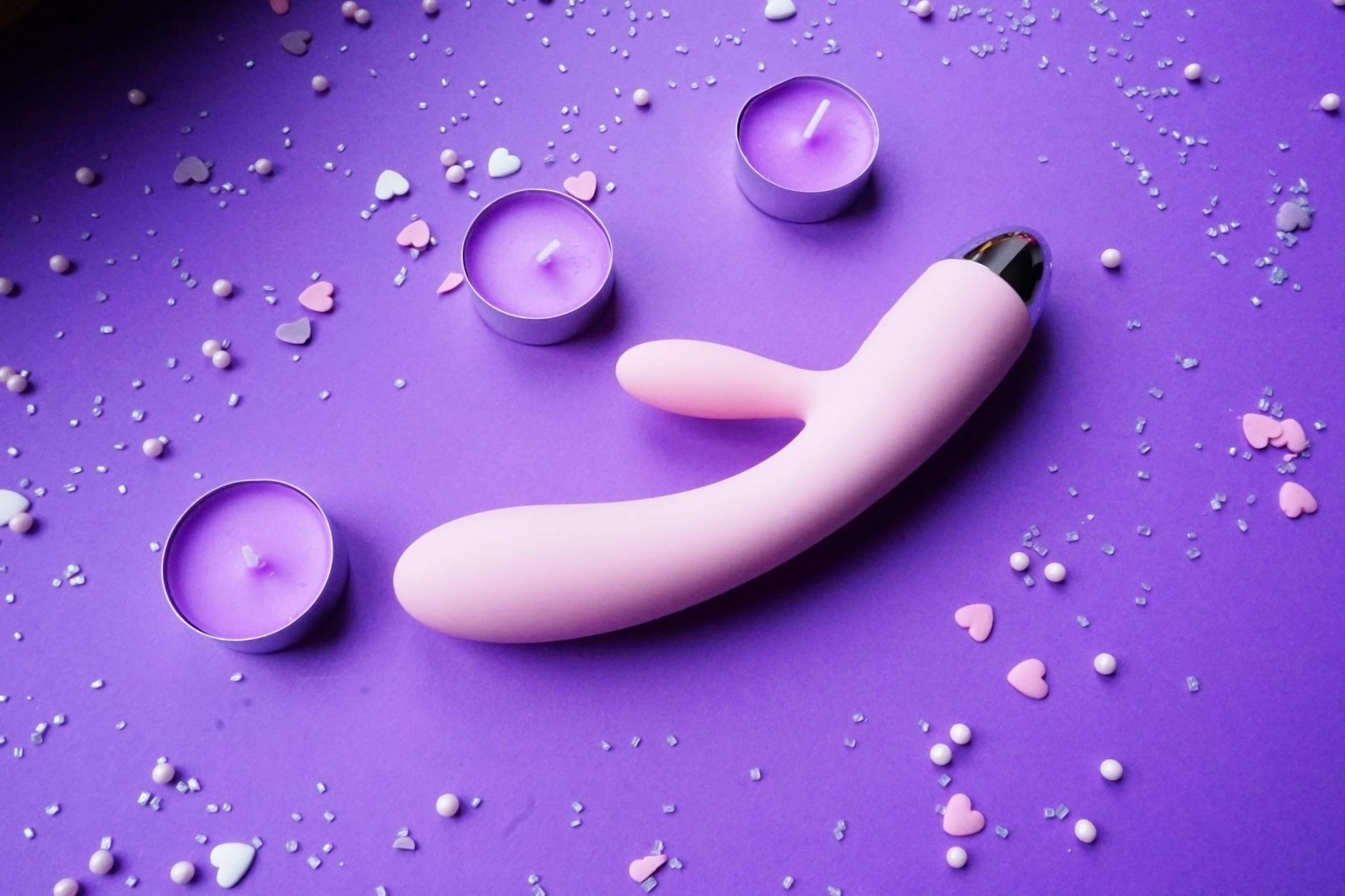
Let's talk about what nobody warns you about
You stop taking hormonal birth control, and suddenly your body feels like someone else's. Your cycle comes roaring back. Your skin changes. Your moods swing in ways you'd forgotten. But here's the part that catches people off guard: your pleasure feels wildly different too.
Not wrong. Just different. And if you've been relying on a vibrator for the past five or ten years, that difference shows up immediately. The intensity that used to work feels too much. The timing feels off. The sensation lands in places you weren't expecting.
I'm Evelyn Granieri, a marriage and family therapist who specializes in how bodies and relationships shift through life transitions. I've worked with hundreds of clients navigating post-pill sensitivity, and the most common question I hear is: "Is my vibrator broken, or am I?"
Neither. Your body is recalibrating. And lemon vibrators, specifically, adapt to that recalibration beautifully because of how they work.
What actually happens when you stop hormonal birth control
Hormonal birth control flattens your natural cycle. It suppresses the hormonal peaks and valleys that make your body feel dramatically different week to week. When you stop taking it, those fluctuations come back fast.
Estrogen rises and falls throughout your cycle. So does testosterone. FSH and LH spike at different times. This hormonal orchestra was playing the same note every single day while you were on the pill. Now it's playing a full symphony again.
Here's what that means for pleasure: your clitoris becomes more sensitive to touch. Lubrication increases and decreases with your cycle. Your arousal speed changes. Some days you're ready in five minutes. Other days it takes twenty. Some days touch feels amazing. Other days the same touch feels overwhelming.
This is completely normal. Your body isn't broken. It's waking up.
The sensitivity spike in the first month off the pill
Most people experience heightened sensitivity in week one, sometimes for the first two weeks after stopping hormonal birth control. Your estrogen levels drop dramatically when you quit, and your body is scrambling to re-establish its own hormone production.
That's why your vibrator suddenly feels too intense. It's not the vibrator. It's that your clitoris is hypersensitive to stimulation right now.
If you've been using traditional vibrators with high-intensity, broad vibration patterns, this can feel jarring. You might touch yourself and feel almost raw. Orgasms can be harder to reach because the sensation is so acute that you can't relax into it.
Lemon clitoral vibrators work differently here. They use suction and gentle pulsing instead of direct vibration. That distinction matters when your tissues are tender. Suction stimulates the internal nerve endings of the clitoris without the abrasive feeling of direct buzz. You get intensity without the feeling of friction overload.
The cycle rhythm you'd forgotten about
When you were on birth control, every day felt the same sexually. You could take a vibrator to bed on Tuesday and Thursday and expect the same experience.
Off the pill, that consistency vanishes. Your follicular phase (the first half of your cycle) feels different from your luteal phase (the second half). In the follicular phase, you might orgasm faster and feel more interested in solo play. In the luteal phase, you might need more time to warm up, but when you get there, sensations feel deeper.
This rhythm isn't a problem. It's information. And once you start paying attention to it, you can plan accordingly. If you know you're more responsive mid-cycle, you can give yourself more time early in your cycle. If you know intensity peaks in the luteal phase, you can dial your lemon vibrator down to gentler settings on days when that would help.
Most people find this rhythm stabilizes after three to four cycles. Your body remembers how to do this. You just have to trust it.
Why lemon sucker toys work better during the transition
A lemon vibrator, or lem vibrator, uses pulsing suction technology to stimulate the clitoris. Instead of the intense, continuous buzz of a traditional vibrator, you get rhythmic patterns that feel less jarring on freshly sensitized tissue.
When you first stop hormonal birth control, your body is flooded with sensations it hasn't processed in years. Your natural estrogen is rising. Your prolactin is adjusting. Your dopamine and oxytocin are recalibrating their response to pleasure.
That's when a tool designed for gentle intensity becomes invaluable. Lemon clitoral vibrators let you control the pulsation pattern and intensity independently. You can choose a gentle, slower pattern that gives you stimulation without overwhelming your nervous system. As you stabilize hormonally, you can gradually explore more intense settings.
The other advantage: lemon adult toys don't require as much direct pressure. You can experiment with positioning and positioning without worrying that you're pushing too hard on sensitive tissue. That flexibility matters when your body is still figuring out what it needs.
The emotional recalibration runs parallel
Let's be real. When you come off hormonal birth control, it's not just your hormones that shift. Your mood shifts. Your confidence shifts. Some people feel liberated immediately. Others feel a little grieving for the stability they had, even if that stability was chemically induced.
If you were on birth control for a decade, your entire adult sexual experience might have happened on hormones. Coming off them means rediscovering what your natural sexuality actually feels like. That can feel exciting or unsettling or both at the same time.
In my practice, I've noticed that clients who give themselves permission to approach their pleasure with curiosity instead of expectation navigate this transition much more smoothly. Instead of thinking "I should still enjoy the same intensity as before," try thinking "Let me see what my body wants right now."
That shift in mindset makes a huge difference. And having a lemon sexual toy that adapts to what you're actually feeling, rather than forcing you to keep up with a rigid vibration pattern, supports that exploratory mindset.
Practical adjustments that actually help
Here are the changes I recommend to clients coming off hormonal birth control:
Start with the gentlest setting on your lemon vibrator and work your way up. You're not broken if you prefer lower intensity right now. Your nervous system is recalibrating. Give it time.
Track your cycle for two months. I know that sounds clinical, but there's real value in noticing when your sensitivity peaks and when you feel more responsive. Apps exist for this, or just jot it down in your calendar. Understanding your pattern makes it easier to plan solo time that actually lands.
Use water-based lubricant even if you normally don't need it. Hormone fluctuations change natural lubrication. Lube isn't a sign of something wrong. It's a tool that helps everything feel better.
Give yourself four weeks before you decide whether a toy still works for you. Your body needs time to re-establish its own hormone production. By week three or four, you'll have a much better sense of what your new normal feels like.
Consider pairing your lemon clitoral vibrator with your partner if you have one. The suction pattern of a lem vibrator feels different from what most partners can do with their hands or mouth alone. That novelty, combined with your body's post-pill receptivity, can deepen connection if you approach it with communication and permission.
When to see a doctor
Most of the sensitivity changes after stopping birth control are normal. They settle within four to six weeks. But if you're experiencing pain, extreme sensitivity that doesn't diminish, or a complete loss of interest in pleasure after two months, that's worth mentioning to your gynecologist.
Sometimes the transition off hormonal birth control surfaces other things. Trauma responses around your body. Relationship dynamics that were masked by chemical mood smoothing. Depression or anxiety that the pill had been managing. None of these mean you did something wrong by quitting. They just mean it's worth getting support from someone trained to help.
The reset is temporary. The freedom is permanent
Your body is relearning its own rhythm. That takes time. But once your cycle stabilizes, you'll have access to information about your sexuality that people on hormonal birth control don't get. You'll know when you're naturally more interested in pleasure. You'll feel the difference between what your body wants and what chemicals are telling your body to do.
Yes, your vibrator feels different. But you also feel different. And that's not a side effect. That's the point.
People also ask
How long does it take to feel normal after stopping birth control?
Most people notice hormone-related changes within the first two to four weeks. Full cycle stabilization usually takes three to four months. Sensitivity and pleasure responses often settle within six to eight weeks. That said, "normal" is individual. Your body might reorganize faster or slower depending on how long you were on hormonal birth control, your baseline sensitivity, and other factors like stress and sleep. Give yourself grace during this recalibration. It's not a failure if adjustment takes longer than you expect.
Will my lemon vibrator feel too intense now?
Likely, yes, at least for a few weeks. But that's why lemon sucker vibrators are particularly helpful post-pill. The suction technology distributes stimulation differently than direct vibration does. Most people find that starting on the lowest setting and working up gradually feels much more manageable. Within a month or two, your body typically re-sensitizes to stimulation in a way that feels balanced rather than overwhelming.
Can I use my old vibrator while adjusting to life after birth control?
You can, but you might want to use it on lower settings or take breaks between sessions to avoid overstimulation. Many people find that exploring a different type of toy during the transition period feels better. A lemon clitoral vibrator offers a different sensation profile that doesn't feel as jarring on newly sensitized tissue. Once your hormones stabilize, you can return to whatever vibrator you prefer.
Does stopping birth control affect arousal timing with a partner?
Absolutely. Most people experience shifts in how quickly they become aroused and how long foreplay needs to be. In your follicular phase, arousal might come faster. In your luteal phase, you might need more time. This is valuable information for partners. It's an invitation to adjust foreplay, communication, and pacing rather than assume something's wrong. Many couples find that post-pill adjustments actually deepen intimacy because they require more intentional communication.
Is it normal to want more or less sex after stopping hormonal birth control?
Both are normal. Some people experience an increase in libido because their natural testosterone and dopamine are no longer suppressed. Others experience a temporary dip as their hormones reorganize. Some notice they have more interest in pleasure with a partner and less solo interest, or vice versa. These shifts typically stabilize within a few months. What matters is giving yourself permission to want what you actually want, not what you think you should want.
Should I switch vibrators after stopping birth control?
Not necessarily, but experimenting can be helpful. If your current vibrator feels too intense, trying a lemon sexual toy with adjustable intensity might feel better during the transition. You don't have to commit to a new toy long-term. Think of it as temporary support while your body recalibrates. Many people return to their original vibrators once their sensitivity normalizes. Others discover they prefer the lemon sucker experience and make the switch permanent. Both outcomes are completely fine.
Sources and further reading
The hormonal changes described in this article are grounded in clinical endocrinology and sexuality research. The studies cited include work on the role of estrogen and testosterone in clitoral sensitivity, the neurophysiology of orgasm across menstrual phases, and the documented effects of hormonal contraceptive discontinuation on sexual function. For deeper scientific context, consult peer-reviewed journals including The Journal of Sexual Medicine, Hormones and Behavior, and Archives of Sexual Behavior.
If you'd like personalized guidance on navigating this transition or exploring how your body's new rhythm might show up in your intimate relationships, reach out. That's what I'm here for.