Let's be real about numbness after 40
You touch yourself. Nothing happens. Or worse, you feel like you're touching someone else's body, not your own. That disconnect is disorienting and frustrating in equal measure. And it's way more common than you'd think.
Most women assume numbness means something's broken. It doesn't. What it means is your nervous system, your hormone levels, and the blood flow to your genitals have all shifted. And all of those shifts are workable. Lemon clitoral vibrators, specifically, are one of the most effective tools for rewaking that sensation because of how they work with your body's current wiring, not against it.
Here's what's actually happening and how to move forward.
What causes numbness in your forties
Three main culprits are at work, and they usually arrive together.
Declining estrogen. Even before menopause officially starts, estrogen begins dropping in your late thirties and forties. This isn't dramatic, but it's steady. Estrogen keeps the tissue around your clitoris thick, elastic, and richly supplied with nerve endings. As it drops, that tissue thins slightly. Thinner tissue conducts sensation differently. Your clitoris isn't less sensitive, exactly. It's responsive in a narrower range, which often reads as numbness.
Reduced blood flow. Arousal is basically a blood flow event. Blood fills the erectile tissue in your clitoris and labia, which is what creates that full, tingly sensation. After 40, blood vessels become slightly less elastic. Your cardiovascular system has to work a bit harder to flood the area. For some women, this happens seamlessly. For others, it stalls somewhere in the middle, leaving you aroused but not fully engorged. That in-between state feels numb because your body isn't delivering the sensation it used to.
Stress and cortisol. By 40, many women are managing multiple life roles. Kids, aging parents, career peaks, relationship renegotiations. All that mental load keeps cortisol elevated. Chronically high cortisol narrows blood vessels and dampens your parasympathetic nervous system, which is what allows arousal to happen in the first place. You can't relax into pleasure if your body is in low-level fight-or-flight mode.
The combination of these three is what most women describe as numbness. It's not that sensation is gone. It's that you need more sustained, targeted stimulation to access it.
Why lemon vibrators are different
Most traditional vibrators use oscillation. They buzz. The motion is very fast and very repetitive, which works well if your tissue is thick and your nerves are primed. But if your clitoris is already numb, oscillation often feels like you're just moving skin around without waking up the underlying nerve network.
Lemon vibrators use suction and pulsing instead. The Lem, for example, uses a gentle suction pattern combined with rhythmic pulses. This approach does something different: it draws blood into the tissue, which is the first step of arousal, and then the pulsing gives your nervous system repeated micro-signals to wake up and respond.
Think of it like the difference between rubbing a sleeping limb and gently pressing and releasing it in a rhythm. One is noise. The other is a conversation your body actually hears.
For women experiencing numbness, that blood-flow component is crucial. You can't feel sensation without proper engorgement, and suction actively helps create that engorgement instead of just hoping it happens on its own.

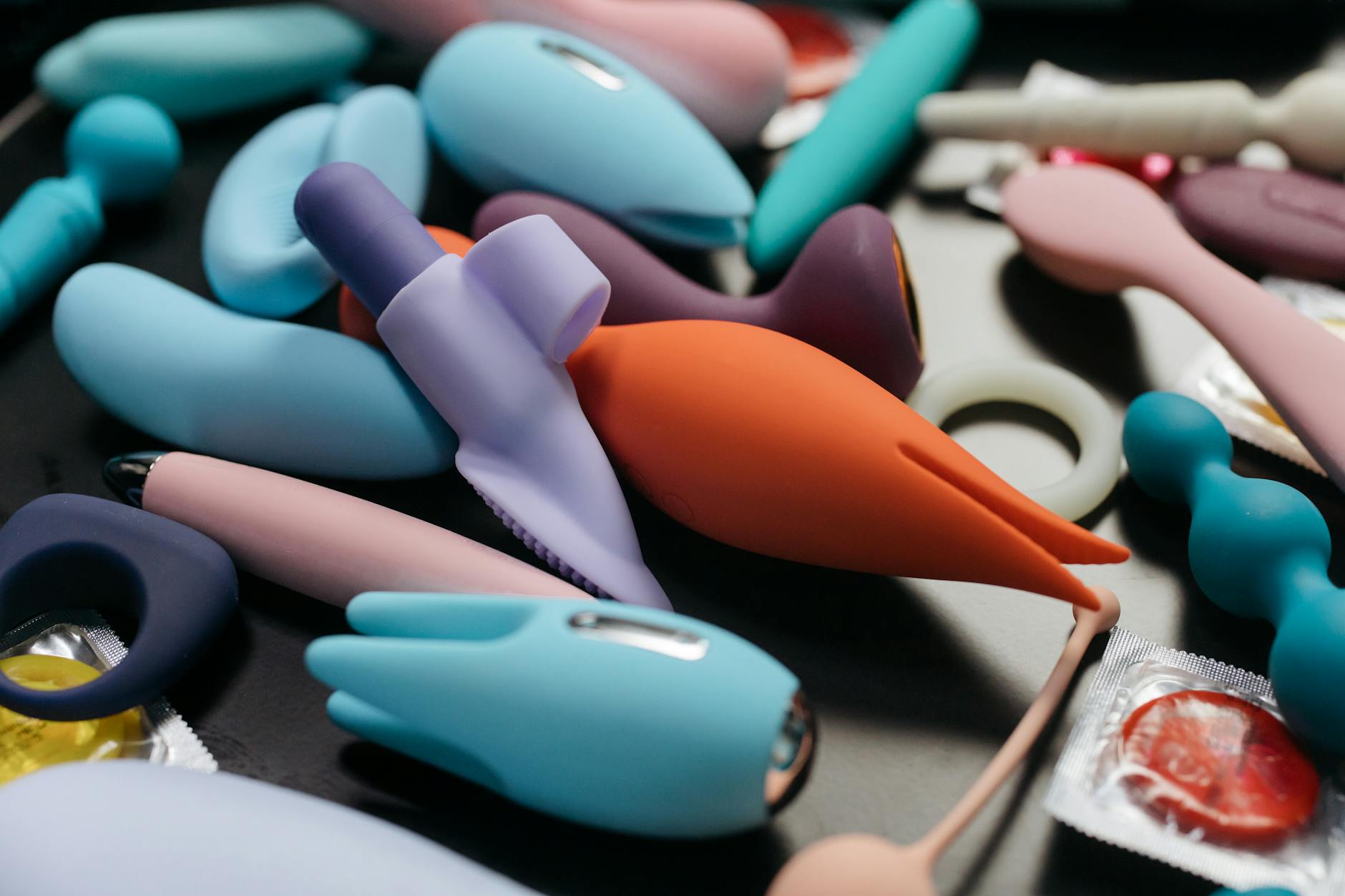
Photo by Anna Shvets on Pexels
How to use a lemon vibrator when you're numb
This is where a lot of people get stuck. They buy a lemon clitoral vibrator, turn it on at high intensity, and when it doesn't immediately restore sensation, they assume it's not working.
Honestly, it's usually a technique problem.
Start with intention. Give yourself 15 to 20 minutes of mental space. Put the phone away. Dim the lights. You're not trying to come quickly. You're trying to wake up sensation, which is a slower process. Your nervous system has been in a certain state for months or years. You're asking it to remember how to respond. That takes time.
Begin with lower intensities. Start on pattern 1 or 2, whichever your lemon vibrator offers. Let the suction pull gently at the tissue. This isn't aggressive. It's almost meditative. You're coaxing blood flow, not forcing it. Spend 5 to 10 minutes here, just noticing what you feel. Even if it's subtle.
Build gradually. Once you feel the tissue beginning to respond, slowly increase the intensity. Move to pattern 3 or 4. The key is that you're building arousal layer by layer, not jumping straight to maximum. This gives your body time to mount a full response.
Pay attention to position. Direct contact on the clitoris is important, but the angle matters. Some women find they get more sensation with the vibrator slightly off-center, stimulating the side of the clitoris. Others need it perfectly centered. Experiment. Your body will tell you what works.
Use lubricant. Even if your body is producing natural lubrication, a water-based lube helps the vibrator work more effectively and makes the whole experience less effortful. Your nervous system can relax more when there's no friction to manage.
The emotional piece that nobody talks about
Here's what often gets missed: numbness after 40 is not just a physical shift. It's also psychological.
Many women spend their thirties and forties in a particular sexual relationship or pattern. Your body has learned what to expect. Your brain knows the routine. And if that routine has been the same for years, your nervous system gets bored. It's not that the sensation isn't there. It's that it's not novel, and novelty is what keeps arousal sharp.
When you introduce something new, like a lemon vibrator, you're not just changing the physical stimulus. You're asking your brain to pay attention again. That matters more than people realize. Some of the sensation recovery women experience with a new device isn't the device itself. It's the fact that they're approaching pleasure differently, more intentionally, with fewer expectations.
When to see a doctor
If numbness is paired with pain, dryness that won't respond to lubricant, or significant loss of desire, talk to your GP or a menopause-trained gynecologist. Genitourinary syndrome of menopause (GSM) is real and treatable, often with topical estrogen therapy that has minimal systemic absorption. It's not something you have to live with.
If numbness appeared suddenly and your hormones haven't changed, it could be a sign of something else neurological or vascular. That's worth investigating, not assuming.
But if numbness has been gradual and you're in your forties or approaching menopause, it's almost certainly the hormonal and blood flow shifts outlined above. And those are very responsive to the right approach.
What's actually possible
Let me be direct: your best orgasms might still be ahead of you. I've worked with hundreds of women who thought sensation was gone for good, tried a lemon clitoral vibrator with patience and the right technique, and discovered a whole new capacity for pleasure they didn't have before.
The difference between numbness and diminished sensation is hope. Numbness sounds like the end of the story. Diminished sensation is a plot twist. It means you get to rewrite how pleasure works, often more intentionally than you ever did before.
People also ask
Why does sensation decrease after 40 but varies so much between women?
It comes down to genetics, existing health conditions, stress levels, and hormone metabolism. Some women have more robust estrogen fluctuations that they barely notice. Others are sensitive to small changes. Cardiovascular health matters too. If you've got good blood flow from regular exercise, numbness might be much milder. Chronic stress is a massive factor that people underestimate. If you're managing high cortisol, you're fighting an uphill battle with sensation regardless of your age.
Can lemon vibrators actually restore sensation permanently or is it temporary?
It's both. In the moment, yes, a lemon vibrator creates sensation through engorgement and neural stimulation. That's temporary. You turn it off, the feeling subsides. But with repeated, intentional use over weeks, your nervous system begins to remember how to respond. You're retraining your brain and body to recognize arousal signals. So while each session's sensation fades, the baseline improves over time. You're rebuilding, not just masking.
Is numbness a sign that I need hormone therapy?
Not necessarily. Numbness can come from blood flow, stress, and nervous system changes without requiring hormonal intervention. That said, if numbness is paired with other menopausal symptoms and is significantly affecting your quality of life, hormone therapy is worth discussing with a doctor. It's not the only solution, but it's a real option if the right practitioner is involved.
Does the type of lemon vibrator matter if I'm experiencing numbness?
It really does. Oscillating vibrators are less effective for numbness because they don't address blood flow. Suction-based lemon clitoral vibrators work better because they actively engage the engorgement process. The pulsing patterns matter too. Slower, rhythmic pulses are more effective for numbness than rapid ones. Look for a lemon vibrator that offers intensity levels you can build gradually, not one that jumps straight to high power.
How long does it usually take to feel improvement with a lemon vibrator?
Some women notice a difference in their first few sessions. Others need 3 to 4 weeks of regular use before sensation starts returning noticeably. The timeline depends on how deep the numbness is and what's causing it. If it's stress and cortisol, reducing stress will accelerate things. If it's hormonal, you might be slower to respond but absolutely still capable of progress.
Can I use a lemon vibrator if I'm on antidepressants that numb sensation?
Yes, absolutely. In fact, many of the strategies that help with age-related numbness also help with medication-related numbness. Suction-based stimulation, longer warm-up time, and gradual intensity increases all apply. That said, talk to your doctor about your specific medication if sensation loss is new or severe. Sometimes switching timing, dosage, or the medication itself can help. A lemon vibrator is a tool that works alongside whatever medical approach makes sense for you.
The takeaway
Numbness after 40 isn't inevitable and it's not permanent. It's a shift that responds to understanding, patience, and the right tools. A lemon clitoral vibrator, used with intention and the proper technique, is one of the most effective ways to rebuild sensation because it works with your body's current physiology, not against it.
Your pleasure matters. If you want help figuring out the right approach for your specific situation, we're here. Reach out to our team at Nancy Lems Shop with any questions.
Resources
If you want to go deeper into how your body changes after 40, these sources are evidence-based and helpful.
Genitourinary Syndrome of Menopause (GSM): American College of Obstetricians and Gynecologists (ACOG) patient education materials.
Belief, Motivation, and Performance: How Psychology Affects Sexual Response. Research in Human Sexuality journal.
Blood Flow and Arousal: Neurovascular Physiology of Sexual Response in Women. Journal of Sexual Medicine.
Stress, Cortisol, and Sexual Function. Hormones and Behavior.
Tissue Changes in Perimenopause and Menopause. Journal of Women's Health.