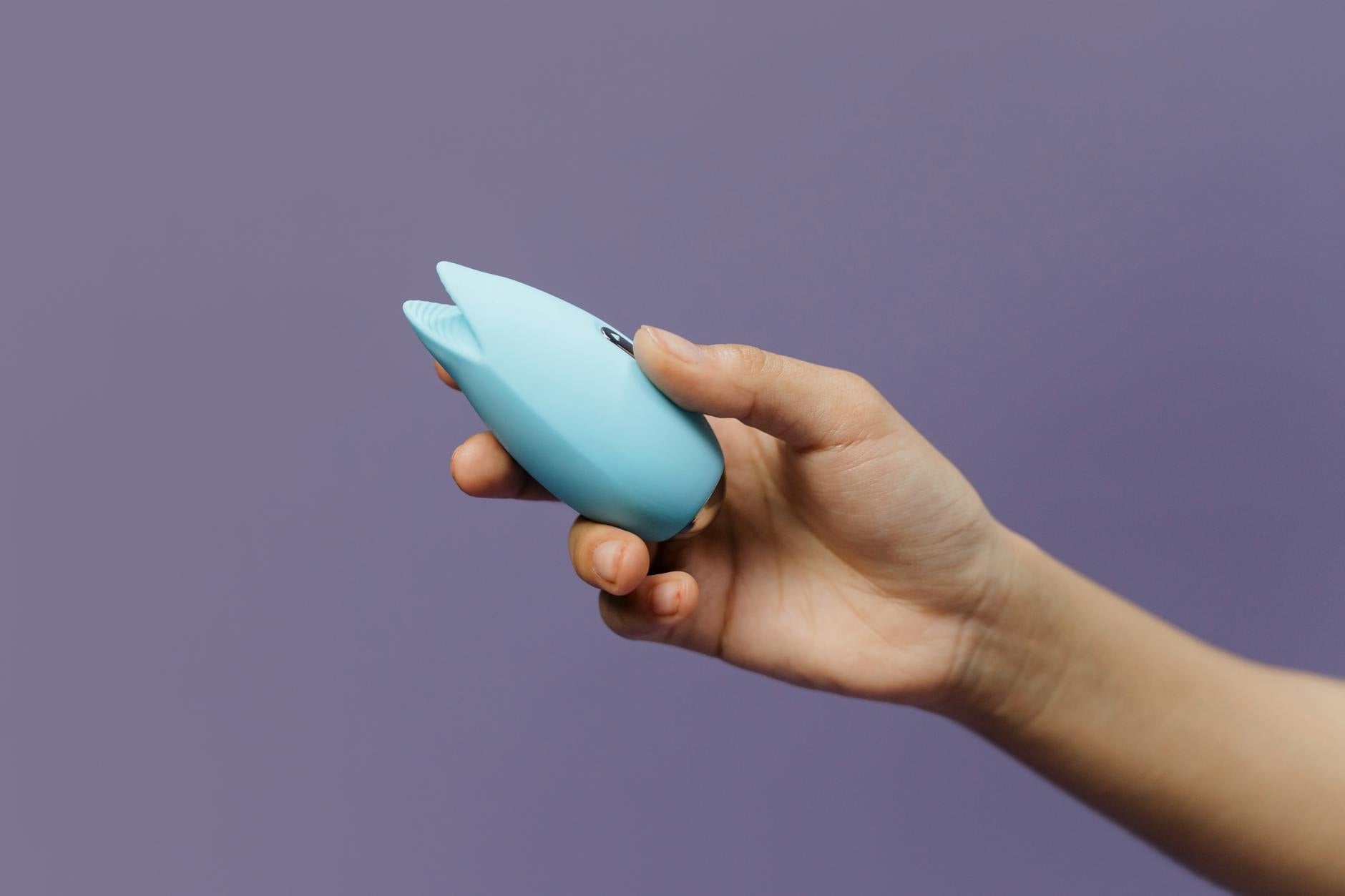
How to Use Lemon Vibrators as a Couple
Here's the thing. Most people think bringing a toy into partnered sex is about dysfunction or replacement. It's not. It's about expansion. And the conversation before the moment is more important than the moment itself.
I work with couples constantly who've been together for years, sometimes decades, and have never actually talked about what they want from sex. They're worried a vibrator means failure. It doesn't. It means you're both curious enough to try something new, and that's actually one of the strongest signals I see for long-term relationship health.
Let's talk about how to make this work.
The conversation comes first, not after
You don't surprise your partner with a lemon vibrator during sex. That's the fastest way to trigger defensiveness, insecurity, or resentment. The conversation about bringing toys into your sex life isn't separate from sex. It's foreplay.
Start outside the bedroom. A casual moment over coffee or on a walk. Not during a fight about sex, and not right before sex. The tone matters. You're not asking permission or apologizing. You're expressing curiosity.
Something like: "I've been thinking about trying something new in bed with you. I'm interested in exploring clitoral vibrators. I think it could feel really good for us." Or: "I read that a lot of couples use vibrators together and get a lot out of it. Have you ever thought about that?"
Listen to what they say without getting defensive. If they're hesitant, ask why. Fear of inadequacy is common. Reassure them: clitoral vibrators work with the body's natural response patterns. They don't replace anything. They amplify. And you get to experience that amplification together, which is the whole point.
If your partner is enthusiastic, great. If they need time to think about it, give them that. This isn't a negotiation where you wear them down. If it's important to you and they're not interested, that's a different conversation about compatibility. But most of the time, once the initial weirdness lifts, people are curious.
Why lemon vibrators work better than other toys for couples
Let's be practical. A lemon clitoral vibrator operates differently than penetrative toys or wand vibrators. The suction mechanism of something like a lem vibrator doesn't require direct contact with skin, so it's safer and feels more integrated into partnered sex rather than separate from it.
Wand vibrators are loud, bulky, and create a lot of distance between partners. They also numb with sustained vibration if used carelessly. Penetrative toys can shift focus away from the partner's body entirely.
Clitoral vibrators using air-suction technology, by contrast, create sustained pleasure without the numbing risk. They work with the body's own arousal. And they're small enough that partners can stay close, can maintain eye contact, can keep hands on each other. That physical proximity matters more than you think for the emotional experience.
The positioning that actually works
Once you've both decided to try this, position matters. Most couples make one of two mistakes: either the receiving partner isolates with the toy while the other watches, or they try to use it during a position that doesn't allow access.
Here's what works:
For partnered penetration: The receiving partner holds or guides the vibrator while the penetrating partner is inside them. This is often the easiest entry point. You're both doing something active. The vibrator adds sensation without replacing the connection you already have. The penetrating partner can feel the vibration through the shared tissues. It's not the toy versus your partner. It's everything together.
For non-penetrative partnered sex: The vibrator is in one partner's hand (usually the receiving partner's, but sometimes the giving partner's). The other partner is using their hands, mouth, or body on other parts. Foreplay. The vibrator concentrates the physical stimulus while the other partner provides broader pleasure and intimacy.
For solo use during partnership: Sometimes the receiving partner uses the vibrator on themselves while their partner is inside them, or during foreplay, or while their partner watches and touches them elsewhere. This requires trust and a partner who doesn't take it personally. The conversation about this matters. "I want to use this because it feels good, and I want you here with me while I do." That framing changes everything.
Lubrication, sensitivity, and the clitoris
Clitoral tissue gets sensitive. If your partner has never used a clitoral vibrator before, start at the lowest setting. The lem vibrator has multiple intensity levels for exactly this reason. Don't leap to level 5 and expect comfort.
Water-based lubricant helps. Even though suction vibrators don't require the same friction as other toys, a little lubrication makes the seal better and the sensation more comfortable. It also signals to your partner that you're prioritizing their comfort, not just rushing to the finish.
Sensitivity varies wildly from day to day and person to person. Arousal level changes it. Stress changes it. Hormones change it. Use the vibrator as a tool for communication, not a destination. "Is this intensity okay?" "Do you want me to focus here or broader?" These questions transform the experience from mechanical to intimate.
The emotional work matters as much as the physical
Inecurity often shows up disguised as practical questions. "Is it because I'm not enough?" "Does this mean you want something different from me?" Neither of these is about the toy. They're about whether each partner feels chosen and valued.
The surest way to defuse this is to name it directly. "I'm excited to try this with you, not instead of you." Or: "I want more pleasure for both of us. That's why I want us to explore this together."
Some partners feel vulnerable being observed while using a toy. Some feel left out if their partner uses one alone. These are legitimate feelings. The solution isn't to avoid the toy. It's to design the experience together so both people feel included and valued.
If your partner is reluctant or uncomfortable during the first attempt, pause. Don't push through. Curiosity works better than pressure. "That didn't feel right. What would make it better?" Might be positioning. Might be intensity. Might be that they need more time.
Maintenance and hygiene matter for trust
Clean your toys before and after, every time. Water and mild soap for most silicone vibrators. Let them dry fully before storage. This isn't just hygiene. It's respect. It shows your partner that you care about their safety and comfort, and that this is something you take seriously, not something you're rushing through.
Store your toys somewhere accessible but not in everyone's face. A drawer in the bedroom is fine. Don't hide it like it's shameful. You've both chosen this. Own that.
When to use the vibrator and when to explore without it
Don't use it every time you have sex. That's how partners become dependent on it, and also how the novelty wears off and resentment creeps in. "Do you only enjoy sex with the toy?" becomes the unspoken question.
Use it when it feels natural. Sometimes that's weekly. Sometimes it's monthly. Sometimes it's a special occasion. The key is that it feels like something you're doing together, not something you're doing to make up for something missing.
Keep exploring without it too. Hands. Mouths. Bodies. The vibrator is one tool in a much larger toolkit. If it becomes the only thing that works, you might need to revisit the conversation about what's actually going on with desire, stress, or connection in the relationship.
People also ask
Will using a vibrator with my partner make me depend on it for orgasm?
No. Clitoral vibrators don't create dependency the way that some people worry they do. The concern is usually less about the toy and more about whether one partner feels they can't satisfy the other anymore. If that's real, that's a communication issue, not a toy issue. Using a lemon vibrator together actually gives you both more information about what works, which usually improves partnered sex overall.
Is it normal to feel insecure if my partner wants to use a vibrator during sex?
Completely normal. A lot of that insecurity comes from the belief that sex should be entirely about what partners do for each other, and that introducing a tool means inadequacy. But that's like saying using lubricant means you don't love each other. It's just a tool that makes the experience better. Talk about it. Listen to your partner's reasons. Usually, insecurity lifts once you understand it's not about you.
Can you use a lemon clitoral vibrator during penetration?
Yes. Many couples use a lem vibrator during penetrative sex. The person being penetrated can hold or guide it, or their partner can. It works because the vibrator doesn't take up space. It adds sensation without creating distance. Start with lower intensities so both partners can adjust to the sensation.
What if my partner isn't interested in using a vibrator but I am?
There's a difference between "I'm not interested yet" and "I'm never interested." If it's the first, give it time and space. Don't badger. If it's the second, you need to decide whether partnered exploration is important enough to matter. Some people genuinely don't want toys. That's their choice. But you also get to have desires. Neither of you has to compromise core values. If this is a dealbreaker, that's information.
How do you bring up vibrators if your partner seems judgmental about sex?
Carefully, and probably not in a way that puts them on the spot. Find educational content you both might enjoy. Mention that you read something interesting. Ask their thoughts. Sometimes people aren't anti-toy so much as they've never actually considered it. Once it's normalized in the conversation, bringing it into the bedroom gets easier. If your partner is genuinely judgmental about sexuality in general, that might be a bigger relationship issue than the vibrator.
How do you know when to introduce a vibrator into a new relationship?
When you're both comfortable talking about sex without shame, and when you've already explored other things together. Usually that's at least a few months in, though every relationship moves at its own pace. If either person feels pressured or unsure, wait. The right time is when both people are genuinely curious, not when one person is pushing to prove something.
The real reason couples use toys together
It's not because anything is broken. It's because pleasure matters, and shared exploration deepens intimacy in a specific way that routine doesn't. When you and your partner are willing to be vulnerable, curious, and playful together, you're doing work that strengthens the whole relationship.
Using a lemon vibrator as a couple is a conversation about desire, trust, and the willingness to grow together. That conversation, more than the toy itself, is what changes things.
Ready to explore? Start with the conversation. Everything else follows from there. If you want more guidance on navigating intimacy conversations with your partner, reach out at /contact.
Sources & References
Evans, A., et al. (2019). "Sex Toy Use and Sexual Satisfaction Among Couples." Archives of Sexual Behavior, 48(2), 439-454.
Meston, C.M., & Frohlich, P.F. (2000). "The Neurobiology of Sexual Function." Archives of General Psychiatry, 57(11), 1012-1030.
Gottman, J.M., et al. (2018). The Science of Couples and Family Therapy: Behind the Scenes at the Love Lab. W.W. Norton & Company.