
Coming back is not the same as starting out
There's a specific awkwardness that comes with restarting pleasure after a real hiatus. Whether you've stepped away for months due to stress, years after a breakup, or because life simply took over, the nervous energy is real. You might worry your body has "forgotten," or that starting again will feel clumsy, or that you're somehow losing ground. None of that is true. But the pathway back is genuinely different from starting fresh as an adult, and it deserves its own roadmap.
I work with plenty of clients navigating exactly this. The good news: your body remembers more than you think. The better news: lemon clitoral vibrators are specifically engineered to make this restart smooth and genuinely pleasurable.
Why long breaks change your baseline
When you've been away from sexual activity or self-pleasure for an extended period, three things happen physically. First, your pelvic floor tightens. Months without stimulation means the muscles down there have been in a relatively static state. Second, your arousal response gets quieter. Your brain hasn't been sending those neurochemical signals on a regular schedule, so the pathways that trigger desire and physical response need a gentle reintroduction. Third, sensation feels different because you're approaching it from a different mental space.
Here's what doesn't happen: you don't lose your capacity for pleasure. Your nerve endings haven't disappeared. Your clitoris is still there, still rich with sensation. You're not broken. You're just in a different phase.
The psychological piece matters as much as the physical. After a long absence, many people carry a low-level anxiety about whether pleasure will feel "right" again. That anticipatory tension actually inhibits arousal more than anything your body has forgotten. A tool like a lemon suction vibrator helps because it bypasses some of that mental loop. You're not relying purely on your own arousal building. The device does some of the work, which takes pressure off you to perform or feel a certain way immediately.
Before you start: three conversations to have with yourself
Restarting physically works better when you've done a tiny bit of mental groundwork first.
Conversation one: release the timeline. You don't need to feel aroused after five minutes or have an orgasm in the first session. In fact, expecting that is the fastest way to create performance pressure that will actually block arousal. If you had a break lasting months, give yourself permission for two to three sessions to just explore sensation without an orgasm goal. This sounds simple. It's actually radical if you've spent your adult life pursuing an endpoint.
Conversation two: separate pleasure from relationship status. If you took a break because of a breakup, sometimes there's lingering guilt or sadness attached to pleasure itself. It can feel disloyal to feel good, or like you're "moving on" faster than you should. That's worth acknowledging. Pleasure isn't disloyalty. It's a basic part of self-care and healing. Using a lemon clitoral vibrator after a relationship ends is about reclaiming your own body, not about replacing connection.
Conversation three: lower your expectations about sensation. People often expect their first reintroduction to pleasure to feel like it used to. That's setting yourself up for disappointment. Sensation will feel different because you're different. You might find it's actually better. You might find it takes longer to build. Both are normal. The Lem, because of how suction stimulation works, tends to feel unfamiliar in a good way, even for people restarting. That novelty actually helps. Your brain isn't comparing it to an old version of you.
The physical restart: four steps
Step one: Start fully clothed, no device. Before you introduce a lemon vibrator, spend a solo session just touching your outer thighs, your lower belly, your inner arms. Places with rich nerve endings but zero performance pressure. Set a timer for ten minutes. The goal is to remind your nervous system that touch is safe and good. If this feels silly, do it anyway. Your body's arousal response has been dormant. It needs a gentle introduction.
Step two: Introduce the Lem on the lowest setting, fully clothed or over underwear. Don't go for direct clitoral contact yet. Try it on your outer labia, your mons pubis, even your inner thighs. This is about sensation without intensity. The suction pattern of a lemon clitoral vibrator is different from traditional vibration. It's gentler in some ways, more focused in others. Spend fifteen to twenty minutes getting used to how it feels. This might not produce arousal. That's fine.
Step three: Progress to direct contact with low patterns. If the clothed session felt good, next time try the Lem directly on your clitoris, starting with pattern one or two. Set aside at least twenty minutes. Your arousal response may be slow to build. That's not a problem. This is information. If thirty minutes of exploration doesn't feel like it's going anywhere, stop. Don't push. Your body will respond better if you're patient.
Step four: Only when you feel genuinely aroused, explore higher patterns. This might take three sessions or ten. There's no timeline. Once you can feel your body responding, building arousal over ten or fifteen minutes, then you can experiment with higher intensity patterns on the Lem. This is when lemon sexual toys start to deliver their real value. The progressive pattern system lets you match the device to wherever you are in the arousal arc.
The emotional part (which is actually the harder part)
I'll be honest: the physical restart is often easier than the emotional one. You restart pleasure and sometimes grief comes up. Or loneliness. Or frustration at yourself for letting so much time pass. Or weird shame about the fact that you're excited about this.
That's all normal. Pleasure doesn't happen in a vacuum. It's connected to your sense of safety, your self-compassion, your relationship to your own body. If you find yourself getting derailed by emotions during solo time, that's not a malfunction. It's information.
Some people find that using lemon vibrators helps crack open some of that emotional stuff because orgasm releases oxytocin and serotonin, which can create a temporary lift in mood. Others find that revisiting pleasure brings up old stuff that needs attention. Both patterns are fine. If you're dealing with genuine trauma or depression, solo pleasure might be part of your healing, but it's not a replacement for actual therapy. Consider it alongside professional support, not instead of it.
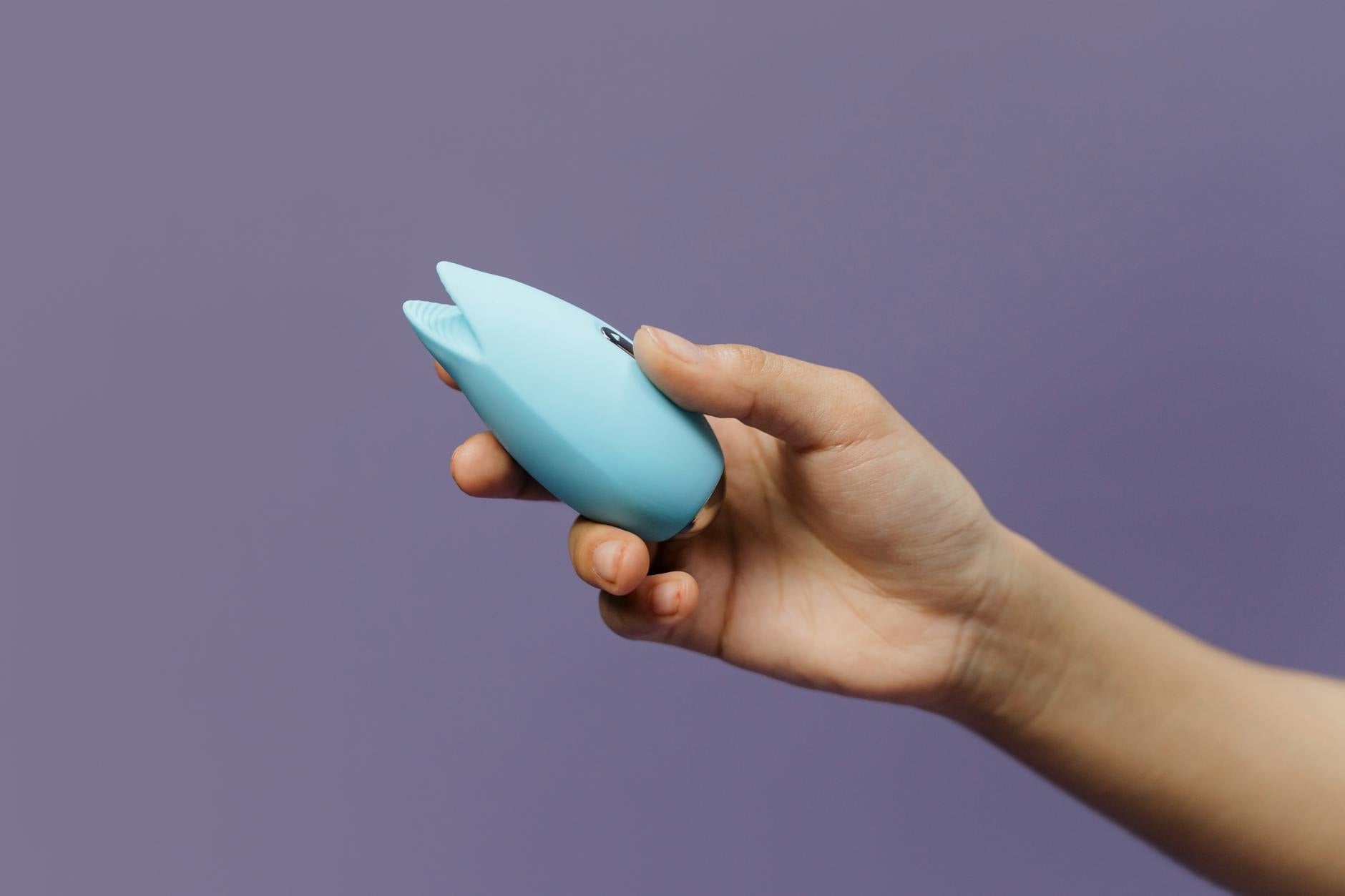
Photo by cottonbro studio on Pexels
If you have a partner, how to communicate about restarting
If you're restarting within a partnership, you have an extra layer to navigate. Your partner might feel nervous about this too. They might worry that a long absence means something is wrong with the relationship, or they might feel pressure to "perform" better or match your energy.
The clearest conversation is this: "I'm restarting my relationship with solo pleasure. It's not about you or us. I'm using a tool that helps me reconnect with my own body." That clarity gives a partner space to not be involved unless you want them to be.
If and when you want to involve a partner, that's a separate conversation. Some people find that once they've restarted alone and feel comfortable with their body again, partnered sex becomes easier. Others find they want to bring the Lem into partnered play. Both are valid. The key is that you've already rebuilt your baseline, so you're not starting from zero with another person in the room.
What lemon adult toys bring to this specific situation
Lemon clitoral vibrators are engineered around suction and pattern variety, which makes them particularly good for restarting. Traditional vibration can feel overwhelming if you're rehabbing sensation. Suction is softer, more gradual, more forgiving. The fact that you can start on pattern one and work up means you can genuinely meet your body where it is today, not where you think it should be.
The Lem specifically has a wide mouth, which means you get broader stimulation rather than a pinpoint focus. For people coming back after a break, that broader sensation often feels more accessible. You're not trying to find a precise spot. You're engaging a wider area of sensation, which is more inherently pleasurable for a nervous system that's been offline.
The five-week checkpoint
Give yourself five weeks of solo exploration before you assess whether this is working. That's long enough to move past initial awkwardness and short enough to still be committed to the process. By week five, you should have a clear sense of whether your arousal response is waking back up, whether the Lem feels good to you, and whether you want to build on this or try a different approach.
If orgasm hasn't happened yet, don't worry. Some people restarting find that pleasure builds but orgasm takes longer to return. That's normal. If orgasm is happening but doesn't feel like much, that's also normal. Orgasm after a long break can feel subtle, almost anticlimactic. Your brain has to relearn the pattern. Give it time.
FAQ: Questions people ask when restarting
How long does it usually take to feel aroused again after a long break?
This varies widely. Some people feel genuine arousal within the first three or four sessions. Others take two or three weeks of consistent exploration. The longer your break, the more patience you'll need. If you stopped for years, don't expect it to snap back in days. That said, most people report feeling some baseline return of sexual interest within two to three weeks of regular, pressure-free exploration.
Is it normal for it to feel emotionally intense, even if I'm excited about restarting?
Completely. Pleasure is wired into your nervous system alongside memory, emotion, and safety. When you restart, sometimes you also restart feelings you'd put on pause. Sadness, grief, joy, vulnerability. These aren't signs something is wrong. They're signs you're reconnecting with a part of yourself that matters. If the intensity feels unmanageable, that's when therapy or talking to a partner becomes important, but the intensity itself is normal.
What if I've been told I have low libido? Does that change how I restart?
Not fundamentally. Low libido often has multiple causes. Stress, hormones, relationship dynamics, medication side effects. If you're restarting after a break, you might actually discover that your "low libido" was partly due to the break itself. Your desire system needs activation to work. That said, if you've been medically evaluated and low libido is a real pattern for you, the restart just becomes more gradual. The same four-step approach applies, but you might need to spend longer at each step and be more patient with yourself overall.
Can using a lemon vibrator alone actually lead to orgasm if I haven't had one in years?
Yes, absolutely. The suction pattern that lemon clitoral vibrators use is actually very effective at triggering orgasm, even for people with less responsive arousal. That said, don't make orgasm the goal of these early sessions. If it happens, great. If it doesn't, you've still done something valuable for your body and your nervous system.
What if my partner wants to participate in my restart?
That's a conversation for you two to have, but my clinical recommendation is that your first few sessions are solo. Solo exploration lets you rebuild your own arousal response without anyone else's presence or expectations in the room. Once you've had two or three good solo sessions, then you can decide if and how you want to bring a partner in. This approach actually makes partnered sex better because you're not learning two things at once (how my body works again + how to be intimate with this person).
How do I know if I'm ready to stop using the vibrator and try without it?
When you can consistently reach orgasm with the Lem and you're curious about what else is possible, that's a natural moment to explore. But honestly, there's no deadline. Plenty of people who've restarted successfully continue using lemon sexual toys regularly as part of their solo practice. That's not a failure or a sign you're dependent on the device. It's just a tool you like. The test is whether you feel pleasure and agency when you use it, not whether you eventually graduate to never using it.
Moving forward
Restarting is not weakness. It's often the result of life circumstances completely outside your control. A breakup, a transition, illness, caregiving demands, grief. You put your pleasure on pause. Now you're ready to restart. That takes courage and honesty about what you want.
The physical tools matter. The Lem, because of how it's designed, makes restarting easier. But the real work is the permission you're giving yourself. Permission to take time. Permission to let your body surprise you. Permission to prioritize this even though you've been away.
Your body hasn't forgotten. It's been waiting.
If you're working through this restart and want support navigating the relationship side of things, reach out. That's what I'm here for.