Let's name what's actually happened
People don't usually start disconnected. Disconnect happens quietly, over months or years. A partner stops asking how your day went. You stop initiating touch. Sex becomes a checkbox or disappears entirely. You're polite to each other, maybe kind, but the thing that made you you as a couple has gone dormant. And now one or both of you wants it back.
Here's the hard part: you can't rebuild intimacy through willpower alone. You need tools. Lemon vibrators work as one of those tools not because they're magical, but because they do something specific. They give you permission to slow down. They make pleasure visible. And they crack open the space where vulnerability can happen again.
Why disconnect kills desire first
Intimacy isn't just sex. But sex is where intimacy lives in your body. When you stop having it, the pathways get smaller. Your nervous system stops expecting touch. Your partner stops initiating because they're afraid of rejection. You stop because you're afraid they'll feel pressured. And somehow, the thing you both might want again feels impossible to reach.
The deeper problem is emotional. Disconnect often arrives with resentment, shame, or just exhaustion. One partner feels abandoned. The other feels like they're doing everything wrong. Sex becomes loaded with all of this. It's not just sex anymore. It's a referendum on the relationship.
A lemon clitoral vibrator interrupts this pattern. Not by fixing the underlying tension, but by creating a new experience outside of it.
Starting the conversation before you start anything else
You cannot bring a toy into this without talking first. I don't mean a three-sentence mention. I mean an actual conversation where both people say what they want, what scares them, and what they're willing to try.
This matters because reconnection only works if both partners choose it. If one person feels ambushed or pressured, the vibrator becomes evidence that something's wrong instead of evidence that something's healing.
Here's what that conversation might sound like: "I've been thinking about us. I miss the physical connection we had. I'm not sure how to get there from here, but I want to try. I came across this tool that I think could help us slow down and remember what we like. Would you be willing to explore that together?"
Notice what's in there: vulnerability, specificity, a clear ask, and permission to say no. If your partner says no, that's information. It means the disconnect is deeper than you thought, and you might need a therapist or counselor before you bring tools into the bedroom.
If they say yes, you've already started rebuilding. You've communicated desire. You've made a joint decision. That's the foundation.
Using a lemon vibrator to practice vulnerability again
Once you're both in, the first session should feel nothing like typical sex. The goal is sensation, not orgasm. The goal is to practice being present with each other.
One partner uses the lemon vibrator on themselves while the other watches. That's it. No performance. No rush.
This matters because watching your partner experience pleasure is radically different from having sex with them. There's no pressure to reciprocate immediately. There's no performance anxiety. One person gets to focus entirely on what feels good. The other gets to remember why they're attracted to this person in the first place.
For the person using the vibrator: start at a lower intensity setting. The Lem works beautifully here because the suction pattern feels completely different from traditional vibration, which means it genuinely does feel new. Spend five to ten minutes just noticing. Where does it feel best? What rhythm actually works for you? Do you prefer firm pressure or gentler suction?
For the partner watching: pay attention. Notice when your partner's breathing changes. Notice what patterns they choose. Notice how their face looks when they're not thinking about you watching them. This is you falling back in love, in slow motion.
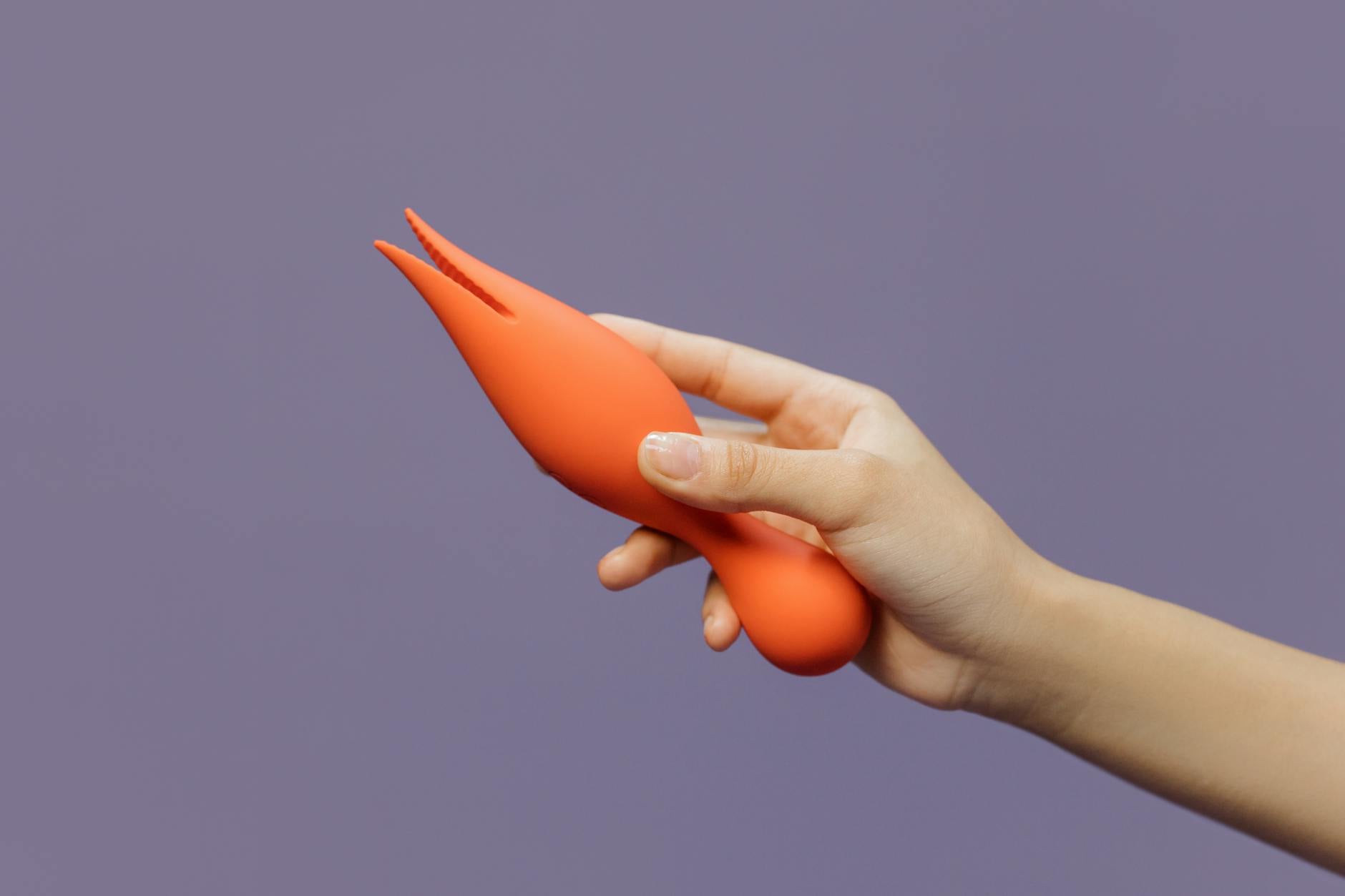
Photo by cottonbro studio on Pexels
The second move: building reciprocity without pressure
Once both partners have done that solo exploration, you can move toward using the vibrator together. But this still isn't typical partnered sex.
Instead, try this: your partner uses the lemon vibrator on you. You don't do anything except receive. No reciprocation expected in that moment.
This is harder than it sounds. People with a history of disconnect often struggle with receiving because it feels selfish or because they're afraid it will create obligation. But here's what actually happens: when you let someone bring you pleasure without needing to perform or reciprocate, something shifts. You remember that your pleasure matters. You remember that they want to give you pleasure. And they remember why they wanted to be with you in the first place.
Your partner can start with the vibrator on its lower settings, moving it slowly. This isn't about getting you off as fast as possible. It's about presence. It's about them learning your body again. It's about you learning to receive touch without immediately giving it back.
Spend time here. This is where reconnection actually happens.
When to bring it into partnered sex
After a few sessions of that, you might both want to move toward actual partnered sex that includes the vibrator. But move slowly.
Some couples find that using a lemon clitoral vibrator during sex changes the dynamic in ways that rebuild connection immediately. The person with the vibrator gets more consistent pleasure, which often means longer sex and more satisfying orgasms. The partner gets to watch and participate. There's less pressure on the penetrative partner to be the sole source of pleasure.
If you're trying this, use lots of water-based lubricant. Take time to warm up before using the vibrator. And check in with each other about what feels good.
Honestly though, some couples find that solo exploration and non-penetrative partnered use of the vibrator is enough to rebuild what they lost. That's completely valid. The goal is reconnection, not any particular sex act.
Dealing with the emotional stuff that disconnect carries
Here's what I've learned after decades of working with couples: a vibrator can create space for reconnection, but it cannot fix the underlying problems that created the disconnect.
If one partner was resentful before you started, they might still be resentful. If there's unresolved conflict about something else entirely, that will still be there. The vibrator gives you a window to reconnect physically. But the emotional work still needs to happen.
That's why I often recommend that couples do this alongside actual therapy or couples counseling. A therapist can help you understand what created the disconnect in the first place. A vibrator can help you remember why you want to stay connected.
Neither one works alone. Together, they can actually rebuild something real.
Red flags that mean you need outside help
If your partner refuses to discuss reconnection at all, that's a signal. If you bring up the vibrator and they become defensive or hostile, that's a signal. If one person is using the vibrator or the reconnection attempt to pressure the other into something they don't want, stop.
Disconnect sometimes happens because a relationship has run its course. Sometimes it happens because the underlying foundation was never solid. Sometimes it happens because one person has checked out completely. A lemon vibrator cannot fix any of those things. Only honesty and, often, professional help can.
But if both people actually want to reconnect? If both people are willing to be vulnerable? If both people are willing to remember why they chose each other? Then yes. Start with conversation. Move to exploration. Let a vibrator be one tool in a much larger conversation about rebuilding what you both lost.
FAQ: Reconnecting With Vibrators
What if my partner is uncomfortable with vibrators in general?
Start without one. Have the reconnection conversation first. Do the exploration without toys. If your partner sees that the process actually brings you closer, they might become curious later. And if they don't? That's okay. Reconnection can happen through other forms of touch. The vibrator is a tool, not a requirement.
How long does it actually take to reconnect after a long disconnect?
There's no timeline. Some couples feel a shift after three or four intentional sessions. Others need months. It depends on how long you were disconnected, how much resentment there is, and whether you're addressing the underlying causes of the disconnect. A sex therapist can give you a more realistic sense of what to expect in your specific situation.
Is it normal to feel awkward during the first reconnection attempts?
Completely normal. You're relearning each other's bodies. You're being vulnerable after not being vulnerable for a long time. Awkwardness is not a sign that you're doing it wrong. It's a sign that you're doing something real and a little scary. Keep going.
What if I finish but my partner doesn't?
That's fine. You're not trying to reach the same finish line at the same time. You're building presence and pleasure back into the relationship. Sometimes that means one person gets to focus entirely on their own sensation. Sometimes it means you take turns. There's no rule.
Can a lemon vibrator replace therapy for relationship problems?
No. A lemon clitoral vibrator is a tool for reconnecting physically. Therapy is a tool for addressing the emotional patterns that created disconnect in the first place. If you need both, get both. They work together.
How do I know if we're actually reconnecting or just going through the motions?
You'll feel it. Real reconnection includes vulnerability, laughter, a little bit of risk. It means you're asking questions you haven't asked in years. It means you're noticing things about your partner you'd forgotten. It means sex starts to feel like connection instead of obligation. If it still feels like going through the motions after several intentional attempts, that might mean you need outside support to address what's really going on.
The thing nobody tells you about reconnecting
Rebuilding intimacy after disconnect is not a linear process. You'll have good sessions and weird sessions. You'll have moments where you remember why you chose this person and moments where you're not sure you still do. That's normal. That's human.
What matters is that you keep showing up. That you stay curious instead of defensive. That you let a tool like a lemon vibrator do what it's designed to do: create a new experience outside of old patterns.
Your pleasure matters. Your partner's pleasure matters. And sometimes, the smallest tools unlock the biggest possibilities.
Ready to explore reconnection more deeply? Let's talk. We can help you figure out what comes next.