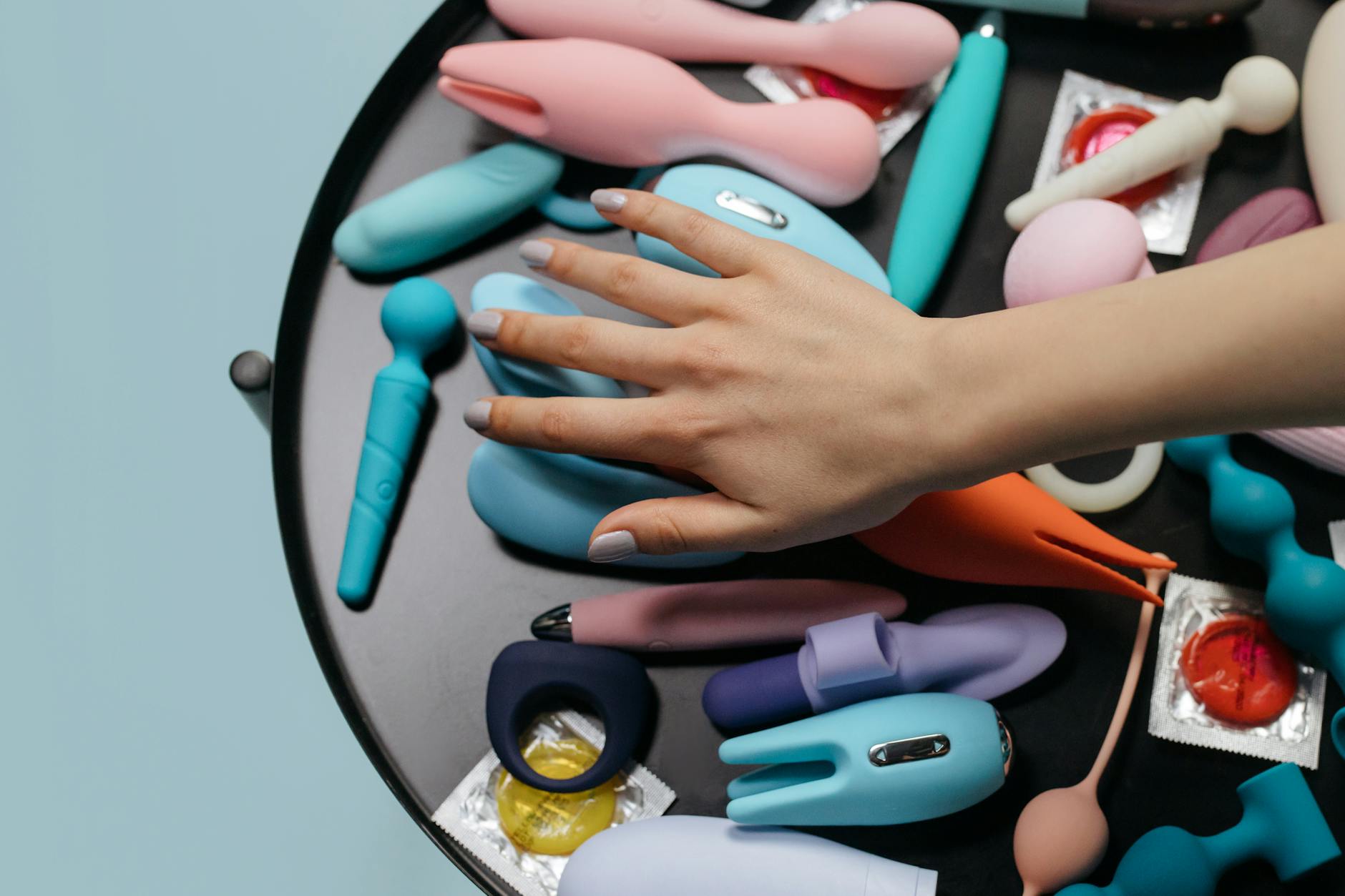
When desire becomes a one-sided conversation
Let's be real. You want sex. Your partner doesn't. Or they used to, and now they're exhausted, stressed, on new medications, dealing with health stuff, or just... checked out. You're not broken for still wanting touch. They're not broken for not wanting it. But the gap between those two truths is where couples get stuck, resentful, and silent.
Here's what I see in my practice: people with higher desire (whoever that is) often stop advocating for their own pleasure because they don't want to be "that person" who's always asking. They swallow the frustration. They stop initiating. They start to feel invisible. A lemon clitoral vibrator becomes not just a solution to the gap, but a way to reclaim something you thought you'd lost in the relationship.
It's not cheating. It's not a substitute. It's a conversation starter, if you let it be.
The pleasure independence paradox
Counterinstinctively, having your own reliable source of pleasure often makes partnership better, not worse. Here's why. When you depend entirely on your partner for orgasms, that dependency loads the encounter with pressure. Every time they're not interested, it feels personal. Every touch becomes fraught with what you're hoping it will lead to. The joy gets buried under logistics.
When you use a lemon sucker or lemon sexual toy independently, a few things shift. First, you're not storing up resentment. You're meeting your body's needs outside the relationship. Second, sex with your partner stops being about "will I get off?" and becomes about actual connection. You're not running a deficit. You're approaching them from a place of relative fullness instead of desperate hunger.
I've had couples tell me that once the higher-desire partner started using the Lem vibrator regularly, they actually initiated sex with their partner less frequently but with way more warmth. The desperation evaporated. The resentment dried up.
Starting the conversation before you buy
Here's where people usually go wrong. They buy a lemon vibrator in secret, use it in secret, and then either get caught or feel guilty about the whole thing. That makes it a problem when it doesn't have to be.
Instead: talk first. I know that sounds awkward. It is. But "I'm thinking about getting a toy for myself because I have needs my own body can help me meet" is a fundamentally different conversation than hiding something.
Your partner might surprise you. They might be relieved. They might have thought you lost interest in sex entirely. They might want to participate sometimes. They might want nothing to do with it. All of those are information you need.
If your partner gets defensive ("You think I'm not enough"), that's actually a bigger relationship issue than a missing desire match. That's worth taking to a therapist, because it's about insecurity and what they need to hear. That conversation is separate from the toy conversation. Don't conflate them.
Say: "I bought something for me. I'd like to use it when we're together sometimes, and sometimes alone. This is about my body having options, not about you failing me." Then stop explaining. Let them sit with it.
How lemon clitoral vibrators fit into mismatched desire
The architecture of a lemon vibrator matters here. Unlike traditional vibrators, which require you to maintain direct contact and rhythm, air-suction toys like the Lem operate through gentle suction patterns. This means you can use them with less deliberate effort, which matters when you're dealing with the emotional weight of a desire mismatch.
You can have it on. You can adjust intensity. You don't have to be "performing" your own pleasure. That distinction sounds small until you realize you've been performing everything in your relationship for months. The Lem lets you just exist in sensation without narrative.
Many people also find that lemon adult toys give different orgasms than partnered sex. Sometimes shallower, sometimes more intense, sometimes just different. When you're used to one type of release, experiencing another can feel unexpectedly good. It expands your own pleasure vocabulary.
The emotional mechanics of using a toy when your partner isn't interested
You might feel guilty. That's normal. You might also feel angry, which is more useful information. Anger usually means a boundary has been violated or you're sacrificing something you shouldn't have to.
Here's the thing though: you are entitled to sexual pleasure. Not entitlement in the bratty sense. Entitlement in the sense that you're a person with a body and needs. Your partner is not obligated to meet every one of those needs. But you are obligated to yourself to not abandon them.
When you use a lemon clitoral vibrator, you're saying to yourself: "My pleasure matters. I'm not waiting around for permission." That's powerful. It shifts something in how you show up in the relationship. You become less needy, ironically. Less desperate for their approval.
If guilt lingers, examine it. Is it coming from your own values, or from internalized messages that women shouldn't enjoy sex unless a partner is involved? That's worth knowing about yourself.
Building a routine when partner sex is scarce
I recommend this to clients: set a regular time for your own pleasure that has nothing to do with your partner's availability. Not out of spite. Out of self-care. Maybe it's Sunday mornings. Maybe it's Tuesday nights. Make it reliable.
This serves three purposes. First, your body gets the regular stimulation and release it needs. Second, you stop waiting around for your partner to want sex, which deflates a lot of resentment. Third, when you do have sex with your partner, you're not starved for touch. You're fresher.
Use this time to learn your own body on a deeper level. Try different patterns on your lemon vibrator. Experiment with speed and rhythm. Notice what actually works for you versus what you think should work. When you know your own body inside out, partnered sex becomes easier to navigate because you can actually ask for what you need.
If you have a private space, keep your toy where you can access it without hunting. Normalize it the way you'd normalize a toothbrush. Pleasure isn't supposed to be shameful.
When using a toy highlights a bigger problem
Sometimes lemon vibrators help. Sometimes they're just a bandage on a wound that needs actual treatment. If your partner's disinterest in sex coincided with a major life change (new job, health issue, depression, medication change), that might be treatable. If it's been years and they show zero interest in addressing it, that's a relationship problem, not a pleasure problem.
You might need to have a harder conversation. "I love you, and I also need to feel wanted sexually. This matters to me. Are you willing to work on this with me?" Some partners will say yes. Some will say no. That information changes what your options are.
Likewise, if you're using a toy to avoid the real conversation about desire mismatch, you're just postponing the hurt. The toy can coexist with the conversation. It doesn't replace it.
The surprising benefit nobody talks about
Here's what I've seen happen repeatedly: couples who address desire mismatch directly, where the higher-desire partner gets their own reliable pleasure source, often end up wanting sex with their partner more, not less. Not because the toy is bad. Because removing the desperation removes the performance. Because you're not resentful anymore. Because sex becomes optional instead of essential.
That shift changes everything. You show up lighter. You touch your partner more casually because you're not angling for sex. You flirt differently. Sometimes, that warmth is what helps a low-desire partner want to reconnect. Not always. But often.
The lemon clitoral vibrator becomes the thing that let you stay in the relationship without sacrificing yourself. That's the real gift.
People also ask
Will my partner feel replaced if I use a toy?
Only if replacement is the message you send. If you frame it as "I'm taking care of my own needs" instead of "you're not enough," the conversation lands differently. Lot of partners worry they're failing you sexually. Showing them you can be satisfied independently sometimes actually relieves that pressure. Have the conversation, listen to their concerns, and reassure them about what the toy means to you.
Should we use the toy together if my partner has low desire?
Maybe, eventually. But not as a fix for their lack of interest. If you bring a lemon vibrator into partnered sex, it should be because it enhances the experience for both of you, not because you're trying to bootstrap their desire. Start with using it alone. If they become curious, that's different than you pressuring them to participate.
How often should I be using a lemon vibrator if my partner isn't interested in sex?
As often as your body needs. There's no magic number. Some people need daily release. Some are fine with twice a week. Listen to your body. If you're using it obsessively as an escape from the relationship problem, that's a sign you need the harder conversation. If you're using it as maintenance, that's healthy.
Can a toy actually fix desire mismatch in a relationship?
No. It can ease the frustration while you address the real issue, but it's not a cure. Desire mismatch usually comes from stress, health stuff, medication side effects, burnout, or deeper relationship disconnection. Those things need actual attention. The toy buys you time and dignity while you figure out what's going on.
What if my partner feels threatened by the toy?
That's information about their insecurity, not about the toy. You might need to explore that with a therapist together. Some partners worry that using a toy means you'll leave them or that they're failing you. Those fears are worth taking seriously, but not by abandoning your own pleasure. Instead: reassure them about the relationship while maintaining your right to self-care. Both things can be true.
Is using a lemon vibrator alone while in a relationship cheating?
No. Self-pleasure is not infidelity. Full stop. You have a right to your own body and your own pleasure, regardless of your relationship status. What matters is honesty with your partner about what you're doing. Secrecy breeds shame and distance. Openness breeds trust, even when it's awkward at first.
The real conversation starts here
A lemon vibrator or lemon sexual toy is not a miracle fix for desire mismatch. It's a tool that lets you preserve your own pleasure while you figure out what's actually happening in your relationship. Whether that's stress, health issues, medication, depression, or a fundamental incompatibility matters enormously. The toy gives you space to breathe while you find out.
But it only works if you're also willing to talk. To ask your partner what's going on. To listen without defensiveness. To consider whether this is something you both want to address, and whether it's fixable, and whether the relationship can survive if it's not.
Your pleasure matters. Your relationship matters. Both things are true. A good lemon clitoral vibrator helps you honor both while you figure out the rest.
If you're stuck in this dynamic and not sure how to move forward, talking to a relationship therapist (even a few sessions) can change everything. They can help you have the conversation you've been avoiding. That's often where the real healing starts.