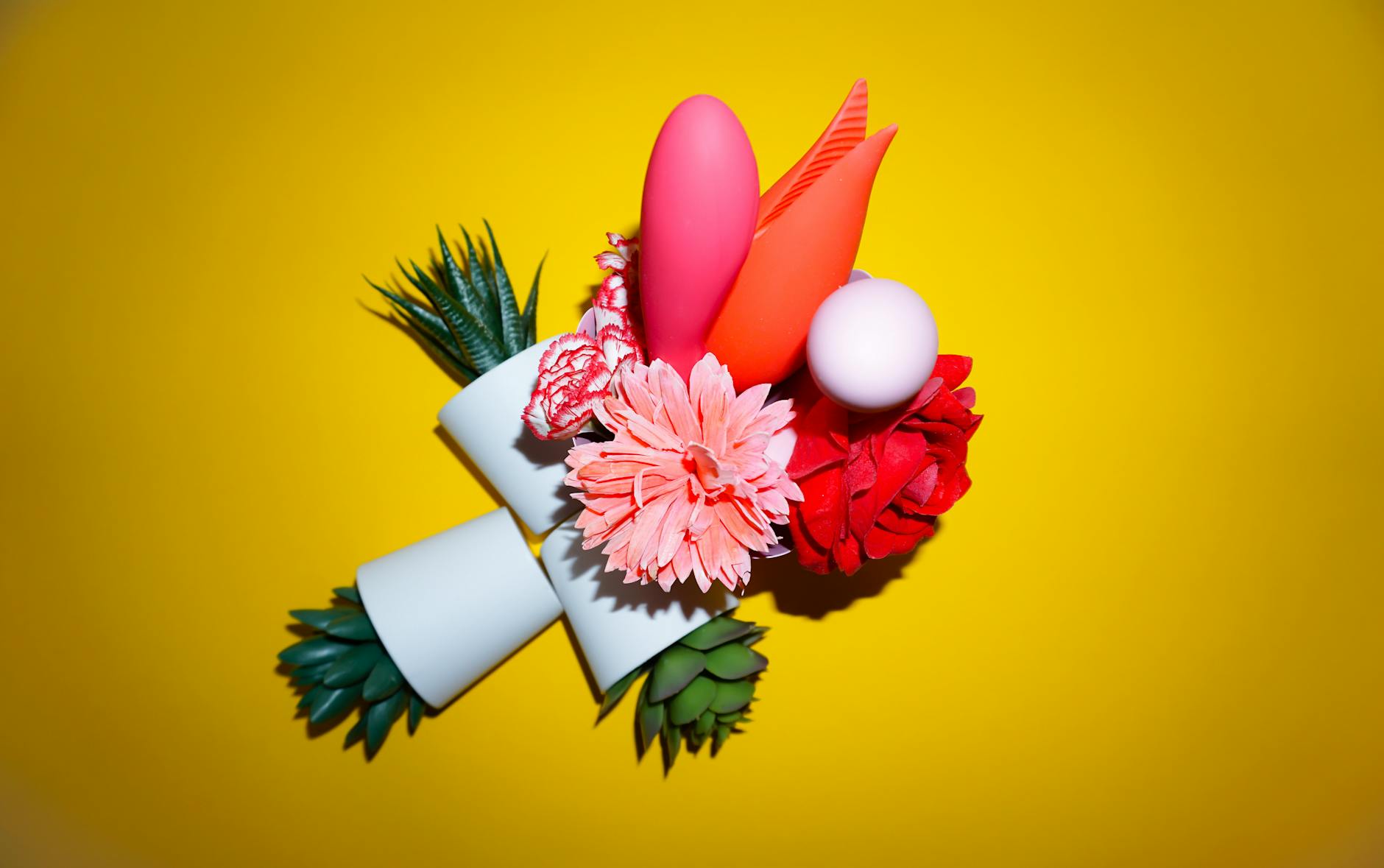
Clitoral sensitivity increases. This is normal. And yes, it changes everything.
Let's be real. Most people assume sensitivity decreases with age. You're told your body becomes less responsive, less eager, less able to feel. Then one day you're 42 and a light touch feels almost electric, and you panic that something's wrong. Nothing is wrong. Your clitoris is actually doing what it's supposed to do.
The shift toward heightened sensitivity is a real, documented change that happens to many people in midlife. It's not universal, but it's common enough that it deserves an actual explanation instead of "just use less pressure."
Why clitoral sensitivity increases as you age
Three biological factors converge in midlife to shift how your clitoris responds to stimulation.
Skin thins. The epidermis gradually loses collagen and becomes more permeable to sensation. Your clitoris sits right under a thin layer of skin, so this change has a direct effect on how intensely you register touch. The same vibration pattern that felt pleasant at 30 can feel sharper at 45.
Nerve density stays constant, but surrounding tissue changes. Your clitoral glans doesn't lose nerve endings as you age. What changes is the tissue structure around it. Less subcutaneous fat, thinner protective layers. This makes nerves feel more exposed and reactive.
Vascular changes. Blood flow patterns shift with hormonal transitions. This can make the clitoris engorge slightly faster and potentially stay in a more persistent state of partial arousal, which changes how sensitive it feels to external stimulation.
Here's what matters: increased sensitivity doesn't mean broken. It means your nervous system is reading input differently. And with the right technique, heightened sensitivity is actually an advantage.
The difference between pain and intense sensation
This distinction is critical. I see many clients confuse the two.
Intense sensation has a sharp edge but feels fundamentally good. Your body relaxes into it. You want more, just in a specific way or at a specific pace. Orgasm builds naturally from that intensity.
Pain is avoidant. Your body flinches. You want the stimulus to stop or reduce significantly. Pleasure doesn't follow. Your nervous system signals danger.
If lemon vibrators or any stimulation triggers actual pain, stop and see a gynecologist. Genitourinary syndrome of menopause (GSM) or another condition might need medical attention.
If heightened sensitivity feels intensely good but almost too much, that's exactly what we're addressing here.
How to adjust your lemon vibrator settings when sensitivity increases
Lemon suction vibrators work brilliantly for age-related sensitivity changes because you can modulate intensity without losing stimulation quality. Here's the protocol.
Start at the lowest setting and spend real time there. With a lemon clitoral vibrator, begin on pattern 1 or 2. Spend 5-10 minutes exploring how that setting feels now. Your baseline has genuinely shifted. What felt sleepy three years ago might feel perfectly calibrated now.
Position matters more than power. Instead of moving the lemon sucker directly on your clitoris, experiment with positioning it slightly off to one side or over the clitoral hood rather than directly on the glans. This reduces direct nerve stimulation while maintaining suction benefit. You get the same pleasure mechanism with less intensity.
Use the pause function deliberately. Many lemon vibrators let you toggle between continuous and pulsing patterns. Pulsing reduces cumulative stimulation intensity. Continuous suction might feel overwhelming; pulsed suction allows your nervous system to recover between peaks.
Layer lubrication for buffering. Water-based lube doesn't just help with friction. A thin layer of lube between your skin and the lemon sucker softens the intensity slightly while maintaining all the suction benefit. It's a mechanical buffer that changes the experience without sacrificing sensation.
Build up through layers. Start with indirect stimulation (hood or side positioning) on low setting for several minutes. Then move to your preferred position if intensity feels manageable. Then increase the pattern. This layering approach gives your nervous system time to acclimate instead of shocking it with maximum sensation.
When heightened sensitivity is actually an asset
Here's what my clients discover once they stop fighting the change.
Orgasms often become faster and more intense. Lower thresholds for pleasure mean less warm-up time. The trade-off is precision over duration. You need more control and finesse, but the payoff is easier climax and often deeper sensation.
Partner play improves because you need less aggressive stimulation. If you've spent years wanting your partner to go harder or faster, heightened sensitivity might actually sync your rhythms better. Your partner doesn't have to be tentative. Light pressure plus lemon suction intensity equals satisfaction without overwhelm.
Masturbation becomes more exploratory. You have bandwidth to notice micro-variations. Different angles, speeds, and patterns register as genuinely different experiences rather than subtle shades of similar. This often leads to discovering new favorite techniques you might have missed when sensitivity was lower.
What not to do when clitoral sensitivity increases
Don't assume you need to stop using vibration entirely. I've worked with people who panicked and switched to vibrator-free sex, only to discover that partner stimulation felt equally intense and left them without any tools for managing the sensation. The vibrator isn't the problem. Poor technique and settings are.
Don't lean into direct high-power stimulation because you're stubborn or because you think you should handle maximum sensation. That's how you accidentally condition yourself toward numbness or discomfort. Honoring your body's new responsiveness is not compromise. It's intelligence.
Don't blame your lemon vibrator for changes in your body. When people switch from traditional vibrators to suction-style toys like Nancy lemon vibrators, heightened sensitivity often feels different. Suction reaches different nerve clusters than vibration does. If you're feeling new intensity, that's partly the toy design and partly your body's genuine change.
Rebuilding confidence with sensitivity changes
Midlife brings a lot of unknowns. Your clitoris getting more sensitive can feel like losing control at the exact moment you thought you'd finally figured out your pleasure.
It's actually the opposite. You're learning your body again, which takes humility and curiosity. Same tool, different settings. Same desires, refined technique. And often, richer sensation than you had before.
Most of my clients report that once they stopped resisting the change and started adjusting their approach, they had some of the best sexual experiences of their lives. Not despite the sensitivity change. Because of it.
Your clitoris didn't break. It evolved. Now you get to evolve with it.
FAQ: Clitoral Sensitivity and Lemon Vibrator Use
Why does my clitoris feel more sensitive now than it did ten years ago?
Several things change simultaneously in midlife. Skin becomes thinner and more responsive to sensation. Hormonal shifts affect blood flow and tissue structure. Nerve density doesn't decrease, but the protective layers around nerves thin, making stimulation feel more intense. These are normal age-related changes, not signs of dysfunction. Think of it like turning up the volume on a stereo that was always working fine.
Is heightened clitoral sensitivity the same as being overstimulated?
Not exactly. Heightened sensitivity means your nervous system registers sensation more intensely. Overstimulation is when that intensity becomes uncomfortable or painful. You can have heightened sensitivity and still feel great, as long as you adjust your technique and settings. It's the difference between a loud song you love and a loud noise that hurts your ears.
Can I still use my lemon vibrator if clitoral sensitivity increases?
Absolutely. In fact, lemon suction vibrators are often easier to calibrate than traditional vibrators when sensitivity increases. You can start on the lowest pattern, adjust positioning, use lubrication as a buffer, and work your way up. The suction mechanism gives you more control over total stimulation intensity than vibration alone.
Should I use a different pattern if my clitoris feels extra sensitive?
Yes. If you've always used pattern 5 or 6, try dropping to pattern 2 or 3 for a few weeks. Your body's baseline has shifted. What felt perfect before won't anymore. Pulsing patterns often work better than continuous suction when sensitivity increases because they let your nervous system recover between peaks. Experiment with settings you might have previously skipped over.
Does lubricant really help with clitoral oversensitivity?
It does, but not in the way you might think. Lube doesn't numb sensation. It creates a buffer layer that softens the intensity of direct contact while preserving stimulation benefit. Water-based lube is best for silicone toys. It reduces friction and allows your body to regulate intensity more gradually. Many people find that adding a light layer of lube transforms heightened sensitivity from overwhelming to perfect.
When should I see a doctor about increased clitoral sensitivity?
If sensitivity comes with pain, burning, or numbness, see a gynecologist. If you're experiencing sudden changes alongside other symptoms like discharge or itching, that's worth a clinical conversation. But straightforward increased sensitivity without pain is a normal part of aging. If your nervous system is working better, that's actually good news.
The bottom line
Heightened clitoral sensitivity in midlife is real, common, and completely manageable. It's not a signal that something broke. It's a signal that your body is changing, which means your technique needs to change too. When you adjust your lemon vibrator settings, positioning, and approach to match your body's new responsiveness, pleasure often gets better, not worse. You're not losing capacity. You're refining it.