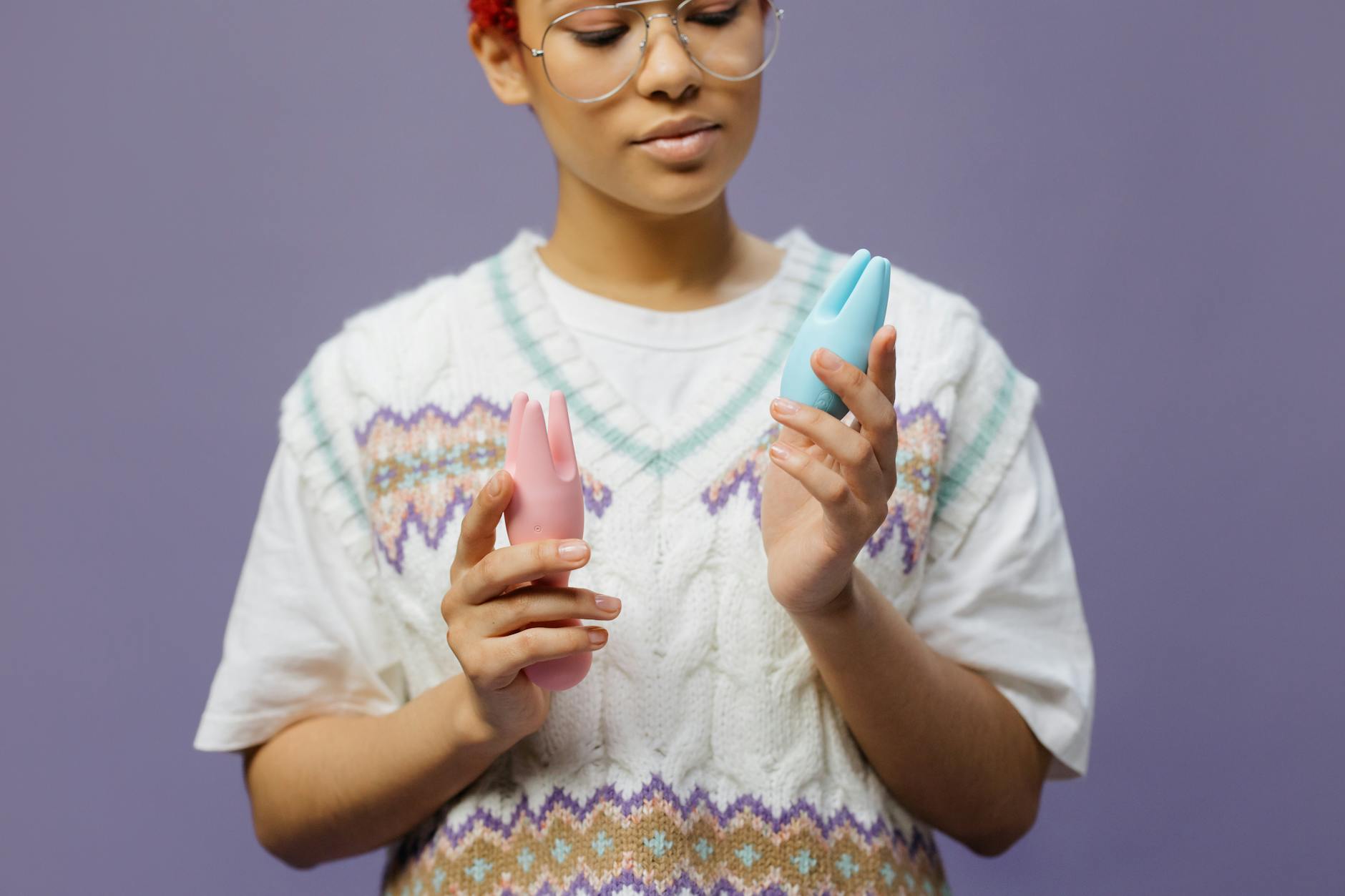
Here's the problem nobody connects the dots on
You want to have sex. Your partner wants to have sex. Your brain is screaming about the email you didn't send, the comment someone made last week, or the weird pain you felt in your shoulder this morning. Arousal dies before it even starts.
This is anxiety interfering with arousal, and it's wildly common. The thing is, anxiety doesn't respond to willpower or reassurance. It responds to the nervous system being told it's actually safe. Lemon vibrators and other clitoral suction toys work because they create a physical chain reaction that overrides anxiety's grip on your body.
Why anxiety kills arousal in the first place
When your nervous system is in fight-or-flight mode, your body deprioritizes sex. Blood flow concentrates in your limbs and brain. The vagina constricts. Lubrication stops. Your clitoris doesn't engorge. You feel numb, resistant, or vaguely uncomfortable. Logically, you're interested. Physically, you're locked down.
Anxiety doesn't care that the threat is imaginary. It doesn't care that you're safe in your bedroom. Once your nervous system is triggered, it runs its entire shutdown protocol. And here's what's brutal: the harder you try to relax and get turned on, the more anxious you become about not being aroused. You enter a spiral.
Most conventional advice says to "reduce stress" or "talk to your partner about it." Both useful. Neither solves the immediate problem of your body being in lockdown when you actually want to connect.
How suction-based stimulation bypasses anxiety
Unlike traditional vibration, which requires you to feel arousal building gradually, suction creates immediate, intense physical sensation that demands your nervous system's attention. The sensation is so direct and localized that it pulls your brain out of the anxiety loop and back into your body.
This is why lemon clitoral vibrators help. The suction sensation is different enough from your typical nervous experience that your brain essentially stops the anxiety broadcast to process what's happening. You're not building arousal from a resting state. You're interrupting anxiety with a competing signal strong enough that your nervous system has to choose which one to pay attention to.
Think of it like this: if you're stuck in an anxiety thought spiral, you can't think your way out of it. But if someone suddenly splashes cold water on you, the spiral stops because a new stimulus hijacks your attention. Lemon vibrators work similarly, except pleasurable instead of jarring.
The setup that actually helps
Timing and environment matter enormously when anxiety is the culprit. You're not trying to "get in the mood" because your mood is hijacked. You're trying to create conditions where your body can override the nervous system's panic response.
Start when you're not already spiraling. The worst time to use a lemon vibrator for anxiety-driven numbness is when you're in acute anxiety. Give yourself 15 to 20 minutes in a quiet space first. Breathe. Some people do a quick walk, shower, or sit outside. The goal is to move your nervous system from "emergency mode" to "baseline stressed" rather than "crisis."
Use it solo first. When your nervous system is hijacked by anxiety, having a partner watching or waiting creates additional pressure. The stakes feel higher. Use your lemon clitoral vibrator alone first, with no performance expectations. This is just you and your body figuring out what works.
Don't start on the highest setting. The instinct is to crank it to maximum because numbness feels like you need intensity. Actually, you need to prove to your nervous system that this sensation is safe and pleasurable, not another stressor. Start at pattern 1 or 2. Let your body acclimate. You can always turn it up.
Expect it to feel awkward initially. When anxiety is running the show, pleasure often feels foreign or even threatening. Your first response might be "this feels weird" or "I don't think I can come." That's not a sign it's not working. It's a sign your nervous system is starting to shift gears. Keep going for five to ten minutes before deciding.
The specific sensation that helps anxiety
Suction-based clitoral vibrators create a rhythmic pulse that's distinctly different from the constant buzzing of traditional vibration. This rhythm actually matters for your nervous system. Consistent, pulsing stimulation can trigger what's called "vagal tone" improvement, which is clinical talk for "your nervous system chills out."
Your vagus nerve is responsible for the parasympathetic response, the thing that tells your body it's safe to rest and digest. When anxiety hijacks your nervous system, your vagus nerve is offline. Certain types of rhythmic, pleasurable stimulation can activate it again. A lemon vibrator's suction pattern does this more effectively than constant vibration.
This is also why you might notice your anxiety actually improving even outside of sex after a few weeks of regular use. You're literally training your nervous system to recognize pleasure as safe.
When to bring a partner back in
Once you've figured out what pattern and intensity work for you alone, you can invite your partner into the experience. The key is framing it differently than usual.
Don't say: "I need this because I'm broken." Do say: "I want to explore this together. I've found something that helps my body relax, and I'd like you to watch or participate."
Your partner isn't there to fix your anxiety. They're there to be present while you use a tool that works. Some partners like watching. Some like to apply the lemon vibrator themselves. Some like to slow down penetrative sex and use it simultaneously. None of these approaches are right or wrong.
Here's what actually matters: your partner understanding that anxiety interferes with arousal isn't about them. It's about your nervous system. The lemon vibrator is just a bridge back to the part of you that wants them.
What changes over time
Most people notice that after two to three weeks of regular use, their anxiety takes longer to shut down arousal in the first place. Not gone entirely. But the shutdown becomes less automatic. Your nervous system starts to learn that pleasure is survivable even when you're stressed.
Some people find that after a few months, they don't actually need the lemon vibrator as much to override anxiety. The practice of using it has rewired their nervous system's baseline response. Others find they love it and keep using it regardless of anxiety levels. Both are fine.
The point is you're not treating anxiety. You're not meditating it away or talking it into submission. You're using a physical tool to remind your body that pleasure is possible even when your brain is worried. That matters.
When to get additional support
If your anxiety is severe enough that nothing physical helps, or if it's preventing you from having any sexual contact, a therapist trained in somatic or sex-positive approaches can be genuinely life-changing. A good therapist helps you understand what your nervous system is actually protecting you from, not just how to override it.
Similarly, if anxiety around sex is new and sharp, it's worth checking in with your GP. Sometimes anxiety about arousal masks something else, like hormonal changes, medication side effects, or a relationship issue that needs actual conversation.
A lemon clitoral vibrator is a tool. A good one. But it's not a replacement for professional support if you need it.
The bottom line
Anxiety doesn't care about logic. It doesn't care that you want to be present with your partner or that you deserve pleasure. It just runs its shutdown sequence. Using a lemon vibrator when anxiety interferes with arousal isn't about forcing yourself to be turned on. It's about creating a physical sensation strong and different enough that your nervous system has to pay attention to something other than the panic broadcast. Most people find that consistent use helps. Some find it life-changing. All of it is worth trying if anxiety has been stealing your sex life.