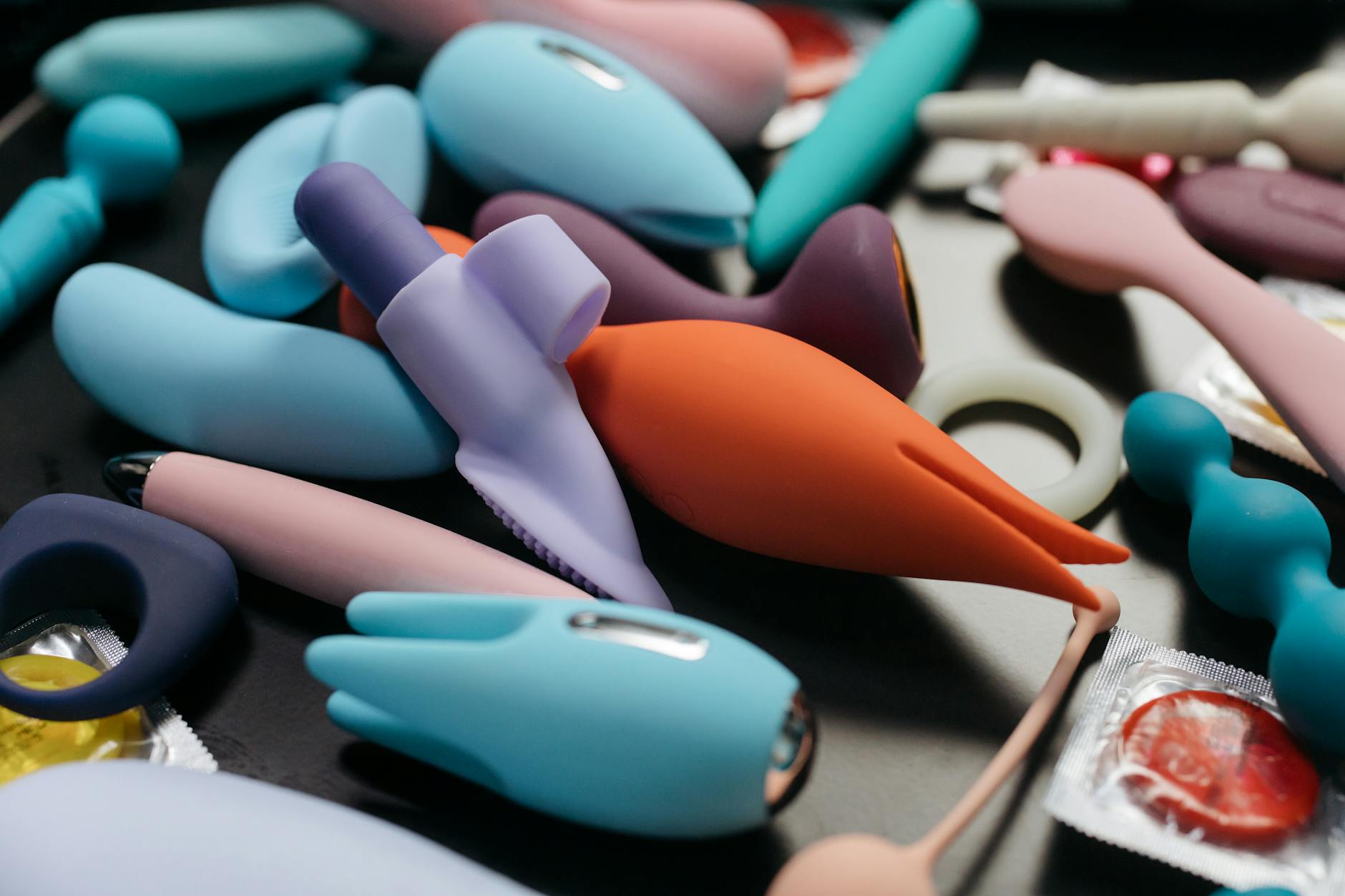
Let's be real about intimacy after betrayal
Trust breaks things. It breaks your sense of safety in the other person's presence. It breaks your ability to relax during sex. It absolutely breaks the assumption that your partner's attention during intimacy means what you thought it meant.
Many of my clients tell me that after infidelity or a major breach of trust, the idea of using a vibrator with their partner feels impossible. Either it feels too vulnerable (why would I show them what I need when they've already hurt me?), or it feels too performative (I'm just trying to prove I'm still interested in us). Both reactions are real. Both are valid. And both suggest that the timing isn't right yet.
But here's what I've learned in twenty years of working with couples in recovery: introducing a lemon clitoral vibrator at the right stage of rebuilding can actually be a turning point. Not because vibrators fix trust. They don't. But because they create a different kind of conversation.
Why trust issues change how intimacy needs to feel
When trust is intact, sex often runs on autopilot. You know your partner, you trust their intentions, your body cooperates. After betrayal, your nervous system doesn't trust that autopilot anymore. You're hyperaware of every touch, every pause, every moment that could mean something it didn't before.
This hypervigilance is protective. It's not a flaw. But it does make traditional partnered sex feel like walking through a minefield. You're watching for threats instead of feeling pleasure.
Here's where lemon vibrators are different. A clitoral vibrator is about direct, consistent stimulation. It's not subjective. It's not dependent on your partner reading your body correctly or being attuned to your needs in the moment. It's a tool that creates sensation independent of emotional variables.
For partners rebuilding trust, that independence matters. It gives you something to focus on besides the emotional weight of the moment.
The three-stage framework for introducing vibrators after betrayal
Stage one: Use it alone first
Don't jump straight to partnered use. Spend two to four weeks using a lemon vibrator solo. Learn what you like, what patterns feel good, how long you need to warm up. This isn't about having great orgasms. It's about reclaiming your own pleasure as separate from your partner's involvement or approval.
This stage also rebuilds your nervous system's sense of safety in your own body. After betrayal, many people lose touch with basic physical sensation. Using a vibrator alone, without performance pressure, starts to restore that.
Stage two: Tell them without showing them
Have a conversation. Not during sex. Not when you're vulnerable. Sit down in daylight and say: "I've been using a vibrator alone. I'm thinking about incorporating it when we're together, but I want to talk about it first."
Listen to what comes up for them. Often, partners who've caused a breach of trust feel deep shame. That shame can come out as defensiveness ("You don't need that, I'm enough") or as a weird kind of eagerness to "make it up to you." Both are attempts to manage their own emotional discomfort, not genuine engagement with what you're asking.
Your job in this conversation is to be clear about what you want and why. "I want to use a lemon vibrator together because it helps me feel pleasure without anxiety. I'm not asking you to perform differently. I'm asking you to be present while I use a tool that works for my body."
Stage three: Start with observation, not participation
The first time you use a lemon clitoral vibrator together, your partner doesn't need to do anything. They don't need to touch you. They don't need to watch intensely or narrate what they're seeing. They just need to be there, emotionally present, not on their phone, not performing reassurance.
Many couples find that starting this way removes all the pressure. You're not trying to come for them. You're not trying to prove anything. You're just introducing a tool into the space you share.
How to actually do this without awkwardness
Set a time when you're both rested and not rushed. Not Friday night after a stressful week. Maybe a Sunday morning or an afternoon off.
Start with skin contact first. Kiss, touch, take ten to fifteen minutes to warm up. Then introduce the vibrator. Use patterns 1 or 2 on the Lem initially. Lower intensity at the start makes it easier to focus on sensation rather than sensation chasing.
Breath matters. If you feel anxiety creeping in, pause and take three deep breaths. Your partner can help by breathing with you, synchronizing so you feel grounded.
Don't aim for orgasm. This is the key mistake couples make. They think the vibrator is supposed to help you come faster or harder, so they use it with performance pressure built in. Strip away that goal. Use it for pleasure. Sensation. Presence. If orgasm happens, great. If not, that's fine too.
What to do if it feels weird (it probably will)
It might feel strange to be that exposed with someone who hurt you. Your body might tense up. Your mind might spin. These are normal. Pause, breathe, acknowledge it. "This feels vulnerable" is a complete sentence. You don't need to push through it.
If your partner seems uncomfortable, that's also okay. They might feel like they're not needed. They might feel shame. Let them sit with that for a minute before you talk about it. Sometimes partners need a moment to process.
The conversation after
Don't debrief immediately. Let twenty minutes pass. Then, in neutral terms, talk about what you noticed. "That felt good" or "I felt less anxious than usual" or "I'm not sure yet." You're not evaluating them or the experience. You're reporting what happened in your nervous system.
This is not the time for your partner to apologize or ask for forgiveness or make it about them. Keep it small. Keep it about you.
When to try more collaborative use
After two or three solo explorations with them present, you might want them to touch you while you use the vibrator. Or you might want them to use it on you. This is a conversation, not something you figure out in the moment.
If you do move toward that, start with them using it while you guide them. "A little faster" or "Same spot" gives you control. Control is rebuilding trust.
The part nobody talks about
Using a lemon vibrator with a partner after trust has broken is not about saving the relationship. I need to be clear about that. It's not a tool that fixes infidelity or heals betrayal on its own. What it does is create a specific kind of safety: the safety of your own pleasure, independent of their performance or their emotional state.
For some couples, that's the beginning of trust returning. For others, it becomes clear that the relationship isn't worth rebuilding. Both outcomes are valid.
What matters is that you're not using the vibrator to prove something or to prove yourself. You're using it because your body deserves pleasure, and you're exploring whether that pleasure can coexist with the person who hurt you.
That's honest work. It takes time.
FAQ
How long should I wait after infidelity before introducing a vibrator with my partner?
There's no magic timeline. Generally, I recommend waiting until you've had serious conversations about what happened, why it happened, and what safety looks like moving forward. For most couples, that's three to six months of active work, not just time passing. The vibrator introduction should happen when you're ready to be vulnerable again, not before.
Will using a vibrator with my partner make them feel inadequate?
It might. And that's their work to do, not yours. If a partner feels threatened by a vibrator, that's usually about insecurity or shame, not about the vibrator itself. You can be compassionate about their feelings without taking responsibility for managing them. A sentence like "This is about my body, not about you" is fair.
Should I ask my partner's permission before using a lemon vibrator together?
No. You shouldn't ask for permission, but you should communicate clearly before it happens. "I'm planning to use a vibrator together next Sunday" is a heads-up. It's not a request for approval. You're giving them information and inviting them to be present.
What if using a vibrator with my partner makes me feel more anxious, not less?
Then pause. Go back to using it solo for a few more weeks. Your nervous system will tell you when it's ready for partnered exploration. Pushing through anxiety rarely works. Listening to it does.
Can a lemon clitoral vibrator help us rebuild physical intimacy faster?
No. Vibrators don't speed up trust rebuilding. What they do is create moments of safety and pleasure while the harder emotional work happens in the background. If you're hoping a vibrator will bypass that emotional work, it won't. But as a companion tool while you're actively rebuilding, it can help.
Is it normal to feel guilty about wanting a vibrator after my partner's betrayal?
Completely normal. Many people feel like wanting their own pleasure is somehow selfish or unfaithful when trust has been broken. It's not. Your pleasure is not a betrayal. Your pleasure is a reclamation of yourself. That's necessary work.
The real work is the conversations
Introducing a lemon vibrator is not the hard part. The hard part is the conversation before it. The conversation after. The willingness to be honest about whether this relationship is worth rebuilding. The willingness to walk away if it's not.
A vibrator can be part of that conversation. But it's never the conversation itself.
If you want support thinking through whether reconnection is possible or worth pursuing, that's what I'm here for. Reach out and let's talk.
References
- Heintzelman, A., et al. (2014). "Infidelity and sexual satisfaction among women." Journal of Couple & Relationship Therapy, 13(3), 218-235.
- Perel, E. (2018). Mating in Captivity: Unlocking Erotic Intelligence. HarperCollins.
- Gottman, J. M., & Silver, N. (2015). The Seven Principles for Making Marriage Work. Harmony.