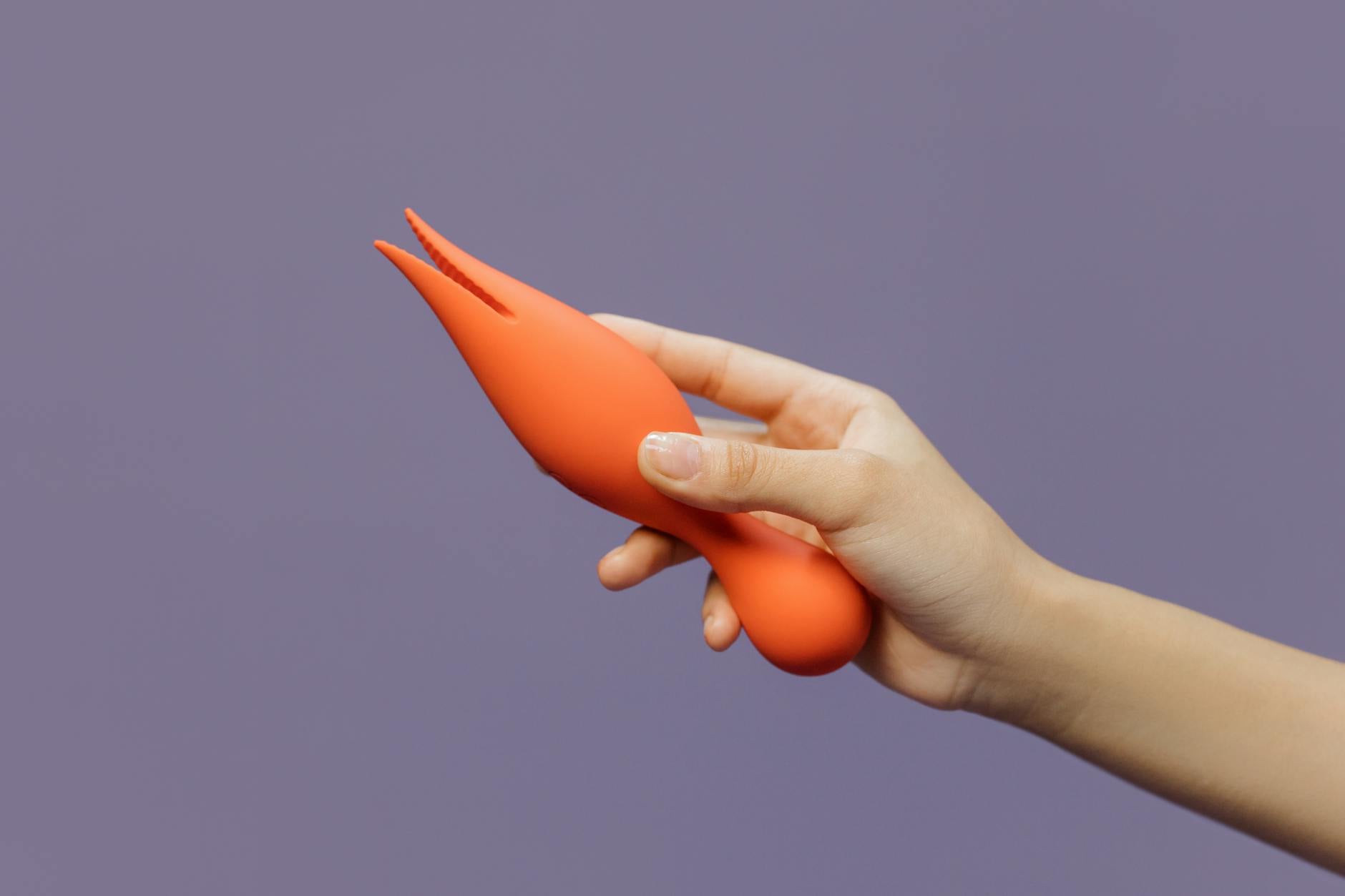
Here's the thing nobody tells you: it's not about the toy, it's about the mechanism.
When you're shopping for a clitoral vibrator, the conversation usually stops at "size" or "noise level." But there's a way more important question underneath: does your body respond better to suction or to vibration? That answer changes everything. And honestly, most people discover this through trial and error instead of knowing what to look for upfront.
I've worked with hundreds of people navigating this choice, and the pattern is always the same. Someone buys a vibrator that works beautifully for their friend and feels underwhelming for them. Not because something is wrong with them. But because they're two completely different sensation types, and the toy that's designed around one mechanism won't necessarily light up the nervous system of someone who responds to the other.
Let's map out how to figure out which path is actually yours.
What actually happens with traditional vibration
Traditional vibrators work by moving back and forth rapidly, usually between 3,000 and 10,000 vibrations per minute. This direct stimulation fires the nerve endings in the clitoral glans in a very specific pattern. It's fast, rhythmic, and consistent.
For a lot of people, this is the golden ticket. The vibration creates a steady buildup that feels like climbing a ladder. Rung by rung. Then you reach the top. If you're someone whose arousal works like that, a traditional vibrator does the job efficiently.
But here's what I see clinically: vibration doesn't work equally well for everyone. Some people need way more time to warm up. Some find that direct vibration on the clitoris becomes overstimulating after a few minutes. Others describe it as feeling slightly numb, like the constant sensation stops registering. That's not user error. That's just how their sensory system processes rapid stimulation.
What suction actually does differently
Lemon vibrators use a completely different mechanism. Instead of moving side to side, they create a gentle seal around the clitoral area and pulse pressure. Think of it like the difference between someone rubbing your shoulder and someone pressing into a pressure point. Both are touch. Neither is better. But the sensation and the response they trigger are fundamentally different.
Suction stimulates deeper nerve clusters rather than just the surface. It also tends to feel less intense initially, which means you can actually work with your arousal instead of against it. You spend less time managing overstimulation and more time exploring what feels good.
The other major difference is rhythm sensitivity. With vibration, you're locked into whatever pattern the toy is set to. With lemon clitoral vibrators, you control the intensity, and many people find they can sense subtle variations in what they're feeling. That feedback loop matters more than you'd expect.
How to know which one your body wants
Three quick diagnostic questions.
First: What's your response to direct touch? If you like your partner's hand or fingers directly on your clitoris, you probably lean toward vibration. If you prefer softer, broader pressure or find direct touch overwhelming, suction is likely your lane.
Second: How long does arousal usually take you? If you build quickly and stay there, vibration works. If you need a slower ramp or if intensity builds gradually and then suddenly clicks into focus, suction tends to feel more natural. Lemon vibrators, in particular, let you start low and drift upward without fighting against a preset speed.
Third: What happens at high sensitivity moments? Some people want more stimulation when they're almost there. Others want the stimulation to actually decrease in intensity at that moment. Vibration almost always stays at the same force. Suction lets you dial it back. That's a huge difference if you're someone whose pleasure response needs space rather than pressure.
The myth that you have to pick one
Honestly, the best answer is often both. Some people have a lemon vibrator for exploring and learning their body, and a traditional vibrator for when they want to get there fast. Others cycle between them depending on where they are in their cycle, their stress level, or whether they're going solo or with a partner.
There's no loyalty oath to sign with a vibrator. You get to be a person who uses suction one week and vibration the next. That's not indecision. That's sophisticated pleasure literacy.
What changes when you switch from vibration
If you're used to traditional vibration and trying out suction for the first time, the first session usually feels pretty underwhelming. That's expected. Your nervous system has been trained by years of vibration. Suction feels subtle by comparison, which initially reads as "less." But subtle doesn't mean less effective. It means different.
Give it three to five sessions. Your arousal response will start to shift. You'll notice that you're actually more present during the experience instead of just tracking intensity. Your partner (if you have one) will probably notice that you're more engaged and talkative, because suction doesn't create the same overstimulation silence that vibration sometimes does.
The lemon vibrator line, for example, is specifically designed to work well for people transitioning from nothing to something, or from vibration to suction. The design accounts for the fact that clitoral tissue varies wildly from person to person, and it doesn't assume that higher intensity automatically means better.
Sensitivity matters more than you think
When I talk about sensitivity, I don't mean you're "sensitive." I mean the actual threshold at which your nervous system registers stimulation as pleasurable versus uncomfortable.
Some people are high-sensitivity responders. They feel everything intensely. For them, vibration can actually become painful pretty quickly, and suction is often a revelation because it spreads the stimulation over a broader area instead of concentrating it.
Other people are lower-sensitivity responders. They need stronger, more direct input to feel arousal building. For them, vibration often works better because it delivers that directness. Suction might feel too diffused.
Neither is more correct. But knowing which you are changes how you shop. If you're sensitive, don't assume a vibrator is the right move just because everyone recommends it. And if you're a lower-sensitivity responder, don't write off suction without trying it properly.
How your arousal pattern shifts things
There's also this factor that almost nobody talks about: whether your arousal builds gradually or plateaus suddenly.
Some people's pleasure response is smooth and ascending. Arousal slowly climbs from zero to orgasm. For these people, vibration is often perfect. The consistent stimulus matches the steady buildup.
Other people experience arousal differently. They spend ten or fifteen minutes in a kind of gentle warm-up zone, and then something clicks and they're suddenly in the orgasm zone. This pattern works really well with suction because you can spend time in that warm-up without fighting the intensity.
Think about your own experience. When you've had an orgasm that felt really right, what was the lead-up like? Did it feel like a continuous climb or more like a slow burn that suddenly flipped? That answer is more useful for picking a toy than almost anything else.
The partnership factor
If you're using a toy with a partner, the mechanism choice changes based on what you're trying to do together.
Vibration can actually be distracting in partnered sex because you have to mentally juggle the toy sensation plus your partner's touch. Some people love that. Others find it chaotic.
Suction tends to integrate more smoothly into partnered experience. It's less intrusive, and it doesn't require your attention the same way. That's why a lot of people use lemon vibrators or lemon clitoral vibrators during partnered sex and save traditional vibration for solo exploration.
When to actually test before you buy
If possible, talk to friends you trust who own toys from both categories and ask them directly what they feel. Not whether it's good, but what it actually feels like on their body. That's more useful than any review.
Online communities like those run by Nancy Lems Shop also share real experiences. Read the unfiltered comments, not just the star ratings. You're looking for people describing sensation, not just saying "love it" or "disappointed."
The bottom line
Choosing between lemon vibrators and traditional vibration isn't about picking the objectively better toy. It's about choosing the mechanism that matches how your specific nervous system lights up. Some bodies want speed and intensity. Others want pressure and control. Some want to try both.
That's not confusion. That's you knowing yourself. Start there, and everything else follows.
People also ask
Are lemon vibrators better than traditional vibrators?
Neither is objectively better. It depends entirely on your body's response. Some people have orgasms with vibration that feel way more intense than anything they've experienced with suction. Others find that vibration barely registers and suction changes their whole experience. The best toy is the one your nervous system actually responds to, not the one that worked for someone else.
How do you know if you're a suction person or a vibration person?
Pay attention to how you respond to direct touch versus broader pressure. If you like your partner's finger directly on your clitoris, you lean toward vibration. If you prefer softer, wider pressure, suction is probably your thing. You can also think about your arousal pace. If you build quickly and steadily, vibration often works. If you warm up slowly and then click into focus, suction tends to match that rhythm better.
Can you use lemon vibrators and traditional vibrators together?
Absolutely. A lot of people keep both because different moments call for different sensations. You might use a traditional vibrator when you want fast results or a lemon clitoral vibrator when you want to explore and take your time. There's no rule that says you have to commit to one or the other.
Do lemon vibrators take longer to work?
Not necessarily longer, just differently. Suction often requires a slightly longer warm-up than vibration because your nervous system needs time to register the sensation. But once you're warmed up, the orgasm can be just as quick or sometimes even faster because you're more present in the experience. A lot of people find they have better quality orgasms with suction even if the actual time is similar.
Why does traditional vibration feel numb after a while?
Your nervous system can actually habituate to constant vibration. The same rapid signal keeps firing, and over a few minutes, your brain stops registering it as novel information. It's not that the vibrator is broken or that you're broken. It's just how sensory adaptation works. Suction doesn't trigger the same habituation effect because the sensation has more variability built in.
Is it normal to prefer one toy type over another?
Completely normal. People have wildly different sensory preferences. Some love vibration, some love suction, and some love both at different times. There's no "supposed to" here. You're learning what actually works for your body, and that's the only metric that matters.
Ready to figure out what feels right
You don't have to guess anymore. Start with an honest conversation with yourself about how you actually experience touch and arousal. Then reach out to the Nancy Lems Shop team if you want to talk through what might work best for you. That's what we're here for. Your pleasure is too important to settle for a toy that doesn't match how your body works.