
Let's talk about what big life changes actually do to your body
You move to a new city. You change jobs. Your relationship structure shifts. And suddenly, the pleasure response that used to feel automatic goes quiet. You're not broken. Your nervous system just got the memo that survival matters more than sensation right now.
When major life transitions happen, the body prioritizes stability over sensation. That's not a personal failing. That's neurobiology. The good news is that reconnecting doesn't require waiting for everything to settle. Sometimes having the right tool—like a lemon vibrator from Nancy Lems Shop—actually speeds up the process.
Why major transitions affect pleasure at all
Here's the thing most people get wrong: they think pleasure stops because they're not attracted anymore, or because something is physically wrong. Neither is usually true.
When you're navigating major change—a promotion that demands 60-hour weeks, a cross-country move, a shift from being partnered to being single again, or even moving in with a long-term partner for the first time—your nervous system is in a low-level activation state. Your brain is running threat-detection software. It's scanning the new environment, the new rhythm, the new social landscape.
In that state, arousal is treated as a luxury item. Your body is asking: "Are we safe? Are we resourced? Do we have time for this?" When the answer feels uncertain, desire dims. Sensation goes numb. Orgasms take longer, feel less intense, or don't arrive at all.
This happens to people at every age and in every relationship configuration. It's especially common when change involves geographic displacement—moving to a new country, starting a new job in a new neighborhood, or even just spending months in an unfamiliar home while renovations happen.
The gap between "ready" and "body is ready"
Here's where a lot of people get stuck. Your mind might be saying: "I want to reconnect with my pleasure. I want intimacy back." And your body is stuck in second gear, unable to accelerate.
This mismatch creates shame. It creates confusion. It creates conversations like: "Why isn't this working? Why don't I want this anymore?" when what's actually happening is your nervous system is still processing the transition.
A lemon clitoral vibrator works here because it bypasses some of that friction. The suction technology used in lemon vibrators—sometimes called a lemon sucker or clitoral suction vibrator—doesn't require your body to build arousal from a cold start the same way traditional vibration does. Instead, it creates a gentle vacuum effect that wakes up nerve endings without demanding that you already be partially aroused.
It's like the difference between trying to start a car on a cold morning versus using a heated garage. The car is the same. The conditions just need slight adjustment.
What makes lemon vibrators different during life transitions
When you're in transition, a few things help more than others.
First, lemon clitoral vibrators work well with divided attention. If you're moving or starting a new job, your mental bandwidth is low. You don't have 45 minutes to "build intimacy" through extended foreplay. A lemon vibrator delivers results in 10 to 20 minutes. That matters when your life feels packed.
Second, the sensation itself feels different than traditional vibration. Suction-based stimulation doesn't numb the way prolonged friction vibration sometimes can. That's useful when your nervous system is already feeling overwhelmed or hypersensitive to input. The lemon suction sensation feels almost gentle by comparison, even though the results are strong.
Third—and this one matters—lemon vibrators work well for solo reconnection, which is often the right first step after major transition. You're not coordinating with a partner. You're not performing or managing someone else's experience. You're just reintroducing your body to the idea that pleasure still exists and is accessible to you.
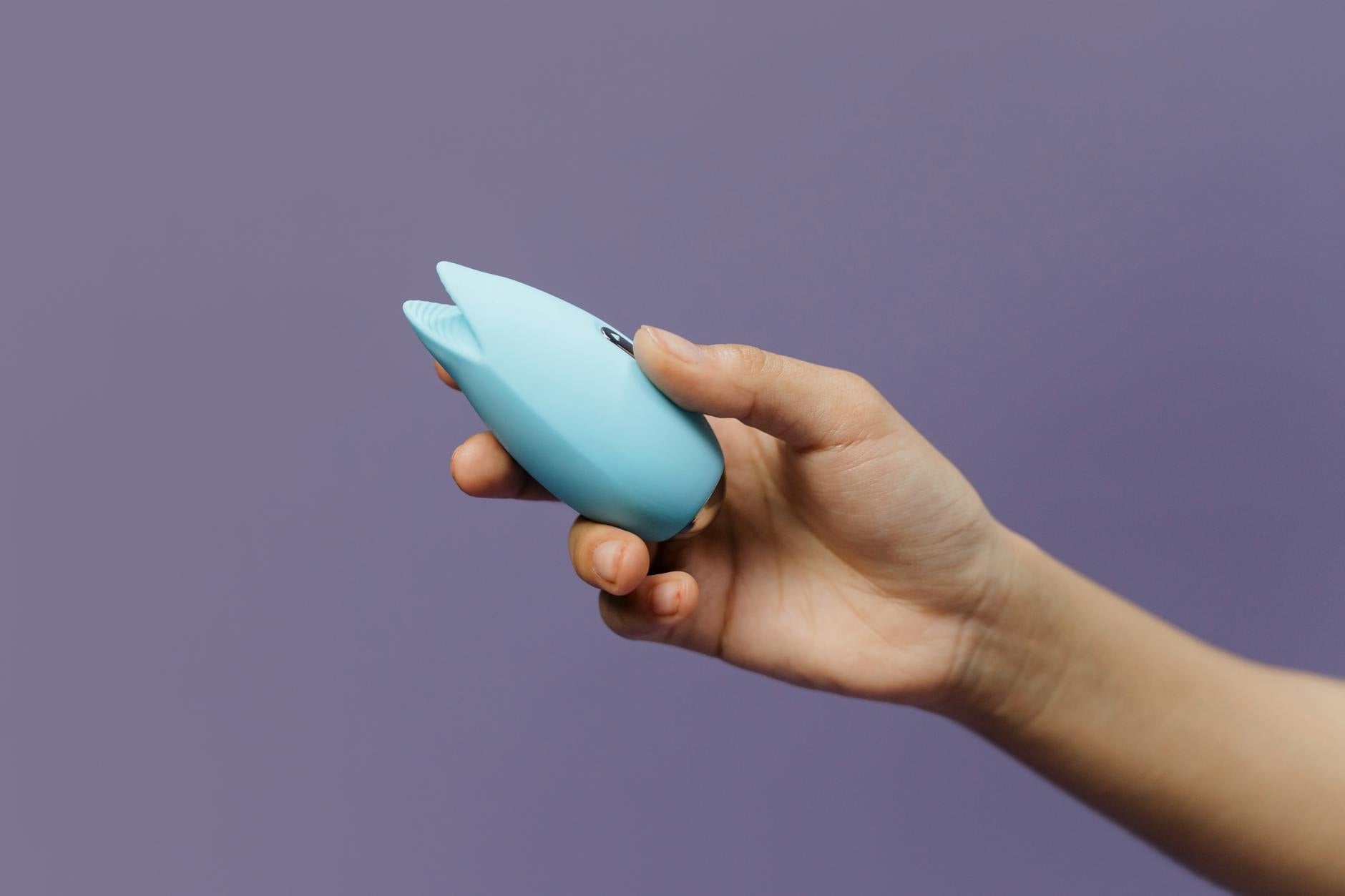
Photo by cottonbro studio on Pexels
The practical approach to reconnecting
If you're in the middle of a major life shift and pleasure has gone quiet, here's how to use a lemon vibrator to bring sensation back online.
Start with curiosity instead of expectation. Don't aim for orgasm. Aim for noticing. What does this feel like on the lowest setting? Does suction feel different than your last vibrator? What sensation can you actually detect right now? This reframes the experience from performance to exploration, which is exactly what your nervous system needs.
Use it when you have genuine privacy and no time pressure. Twenty minutes alone, no agenda, no "I should be done by now." That unrushed space is where reconnection happens. Your nervous system needs to feel like: "Okay, we're safe. There's time. This matters."
If sensation still feels muted after a few tries, that's not a sign that lemon vibrators don't work for you. That's a sign that your nervous system is still processing transition. Keep going. Pleasure often needs repeated, low-stakes exposure to come back online. You're essentially re-teaching your body that sensation is safe again.
When you're ready to involve a partner again—whether that's a long-term partner you're reconnecting with or a new partner—lemon clitoral vibrators work really well in partnered sex too. They don't require your partner to coordinate rhythm the way traditional vibration does. You can hold it yourself and set the pace, which reduces performance pressure significantly.
Reconnecting with a partner through transition
If you're navigating transition within a relationship—you both moved for a job, you're adjusting to a new phase of partnership, you've weathered something difficult together—then integrating lemon vibrators can be a bridge back to intimacy.
Here's what works: introduce it as a shared curiosity, not a fix. "I want to explore this together" lands differently than "I need this because something's wrong." A lemon vibrator becomes a tool you're both interested in, not a sign that the old way doesn't work anymore.
Many couples find that using a lemon clitoral vibrator together helps rebuild intimacy after transition because it removes some of the pressure to "perform" arousal. You can both be present, both be interested, without needing to hit some arbitrary sexual milestone. It's collaborative, which is often exactly what you need when life is chaotic.
The timeline for reconnection
There's no fixed timeline for when pleasure comes back online after major life transition. Some people reconnect within weeks. Others take months. Both are completely normal.
What matters is consistency without pressure. If you're using a lemon vibrator or any other approach to reconnect, show up for it regularly but without rigid expectations. Three times a week of actual exploration beats seven times a week of frustrated effort.
Your nervous system is reading the environment. It's checking: "Is it safe to prioritize pleasure now? Has the threat passed? Is there stability?" As your external life settles, as you get to know your new city or your new job or your new relationship configuration, your body will gradually shift from threat-detection to pleasure-access.
Using a lemon clitoral vibrator during that window can accelerate the process. It's like saying to your body: "Hey, we're still here. Pleasure still matters. Let's remember what this feels like."
FAQ: Reconnecting with pleasure after life changes
How long does it usually take to feel sensation again after a major move?
There's huge variation here. Some people reconnect within 2 to 3 weeks once they're settled in a new space. Others take 2 to 3 months. The timeline depends on how disruptive the change was, how much your daily routine shifted, and whether you had other stressors piling up at the same time. Moving for a job is different from moving because of relationship change, which is different from relocating internationally. Your nervous system needs time to establish safety in a new environment. That's biological, not psychological.
Will a lemon sucker work if I'm feeling numb from antidepressants and also in transition?
Yes, and in fact, a lemon vibrator often works better than traditional vibration in this scenario. The suction sensation can cut through numbness more effectively than vibration alone. If you're navigating both medication adjustment and major life transition, that's a cumulative load on your nervous system. A lemon clitoral vibrator is gentler to start with while still delivering strong sensation. Start on the lowest setting and be patient with the timeline.
Can using lemon vibrators with a new partner after transition feel awkward?
It can if you frame it as a fix or a workaround. It won't if you frame it as exploration. "I've been interested in trying different types of stimulation" is a completely normal thing to say to a new partner. Most people appreciate directness about pleasure. A lemon vibrator becomes just another tool in the conversation, not a secret admission that something's wrong.
What if I reconnect with solo pleasure but partnered sex still feels disconnected?
This is actually really common after major transition. Solo reconnection and partnered reconnection are different neural pathways. You might need to rebuild them separately. Start with more time together outside sex. Build trust and ease back into the physical relationship slowly. When you do integrate sex again, lemon vibrators can help because they let you control the intensity and pace, which reduces performance pressure.
How do I know if it's transition affecting pleasure or something else?
Ask yourself: did my pleasure change after the transition happened? If yes, and nothing else has changed physically, it's likely transition-related. If pleasure was already declining before the transition, there might be other factors worth exploring with a healthcare provider. Most often, though, life change and pleasure shift are directly connected.
Should I tell my partner I'm struggling with pleasure during this transition?
Yes. "My nervous system is still processing our move" or "I'm adjusting to this change and it's affecting sensation" are vulnerable and true things to say. A partner who cares about you will want to understand what's happening. This conversation also opens the door to exploring solutions together, like using lemon clitoral vibrators or just being patient with the process.
The path forward is about reconnection, not recovery
Let's reframe this: you're not recovering something you lost. You're reconnecting with something that's still there, just temporarily offline. Your capacity for pleasure didn't disappear. Your clitoris still has 8,000 nerve endings. Your orgasmic potential is still intact.
What shifted is access. And access can be restored, often quickly, with the right conditions and tools.
A lemon vibrator from Nancy Lems Shop gives you those conditions. It's a tool designed specifically for pleasure reconnection because suction-based stimulation works differently than traditional vibration. It meets your nervous system where it is during transition—not demanding a huge arousal building phase, not requiring perfect conditions, just gently waking up sensation and reminding your body that pleasure still matters.
If you're in the middle of major life change right now and pleasure feels distant, know that you're not broken. Your system is just recalibrating. And there's a clear path back.
Ready to explore what works for your body? Let's talk. Reach out at /contact and we can help you figure out the best approach for where you are right now.